
Google Cloud Platform Technology Nuggets — December 1–16, 2025
Welcome to the December 1–16, 2025 edition of Google Cloud Platform Technology Nuggets. The nuggets are also available on YouTube.
This will be the last issue for 2025 and we will return back in mid-January 2026. I wish to thank all my readers for supporting this bi-weekly newsletter and wish all of you a Happy 2026 in advance.
AI and Machine Learning
You can now put real-time voice and video into your apps using the Gemini Live API on Vertex AI. The big change is that it handles audio directly i.e. native studio. This means you don’t need separate tools to turn speech into text and back again. It makes conversations with the AI feel much faster and more natural. Key capabilities include “barge-in” (allowing users to interrupt the model naturally) and tool integration. Check out the blog post for more details and multiple demos to see this API in action.
In addition to the introductory blog post above, what you want as a developer is a guide to understand how to build a voice agent that can handle interruptions (as if its a real person). It gives you the actual code you need to set up the connection and handle the audio stream properly. It’s a practical tutorial for getting started with the new Live API. Check out the blog post.
One of the biggest announcements this week is one that a lot of developers have been waiting for a long time. Google is officially supporting the Model Context Protocol (MCP), a standard way to let AI agents talk to your data and tools. Instead of writing custom code to connect an AI to every single service you use, you can use these ready-made connectors. It initially announced support for 4 key services:
- Google Maps
- Google Compute Engine (GCE)
- Google Kubernetes Engine (GKE)
- Google BigQuery
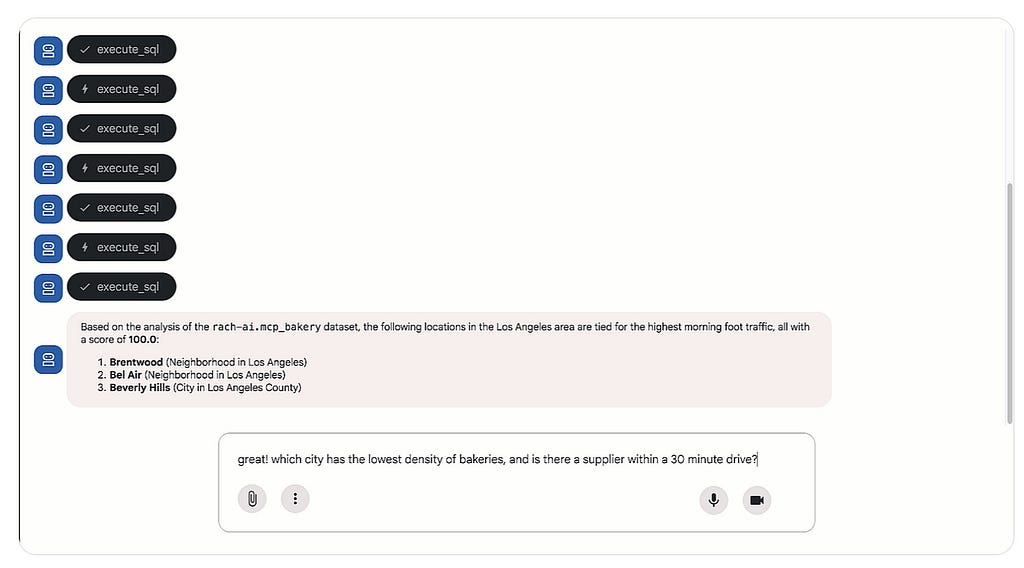
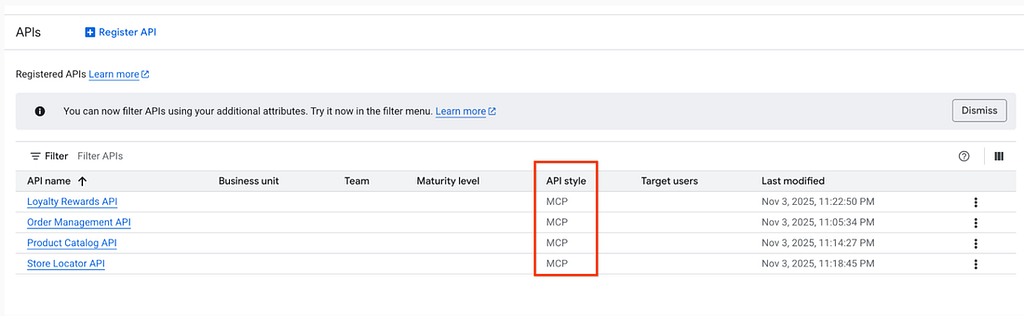
Apigee too announced support for MCP. You can turn your existing APIs into MCP tools, governed by the same set of policies and with full visibility over agentic interactions. Check out the post.
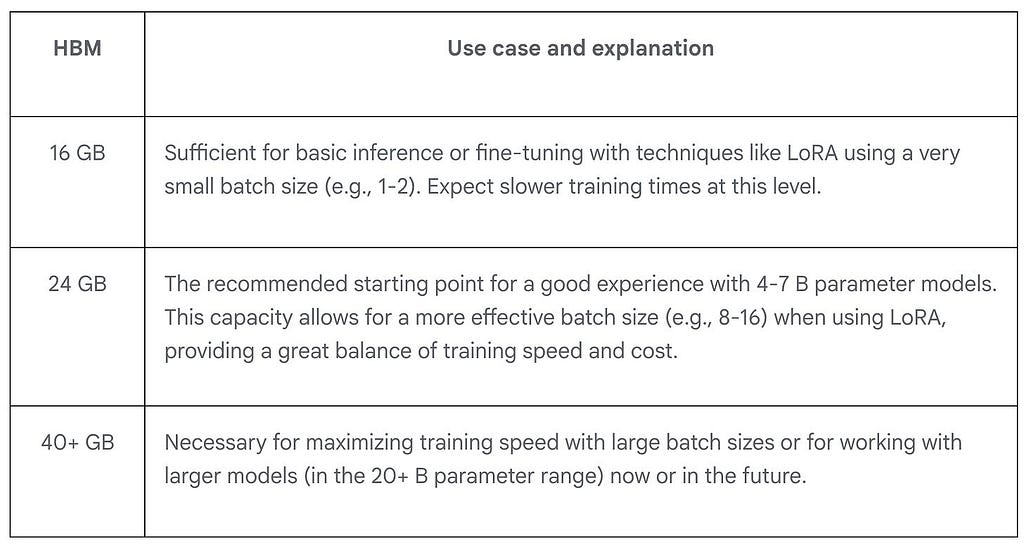
For those fine-tuning AI models, understanding GPU memory is key to performance and cost. This guide decodes High Bandwidth Memory (HBM), explaining why it’s the bottleneck for many AI workloads. It offers tips on how to calculate your memory needs based on model parameters and batch sizes, helping you choose the right GPU instance for your fine-tuning jobs.
One can never get enough of samples that show how multiple AI Agents can work together. Check out the blog post that highlights how to build a system whree multiple AI agents work together to predict business trends. Instead of asking one AI to do everything, they split the work: one finds data, one analyzes it, and another critiques the results. It turns out this team approach works much better than doing it all at once.

Many teams are using AI coding tools, but are they actually helping? This blog post explains how to use the DORA framework to measure real results. It helps you figure out if your AI tools are actually making your team faster and better, or if they are just another thing to manage. It identifies seven core capabilities, such as “Healthy Data Ecosystems,” “Strong Version Control,” and “Working in Small Batches”, that amplify the benefits of AI in software delivery. It’s a practical framework for engineering leaders.

Data Analytics
If you are looking to bookmark just one link to keep yourself informed about all the happenings in Google Data Cloud, then check out the link “Whats New with Google Data Cloud”.
You can now connect Looker to Gemini Enterprise, so you can “chat” with your data. This is made possible by the MCP Toolbox for Databases and specifically its Looker Integration. The step by step tutorial provides you all the information to setup the MCP Toolbox, write an Agent using the ADK, deploy it using Agent Engine and then configure it inside Gemini Enterprise. The end result: You can ask questions in plain English, and the AI can run the right SQL queries or find the right dashboard for you. It makes business intelligence much easier to access for everyone.
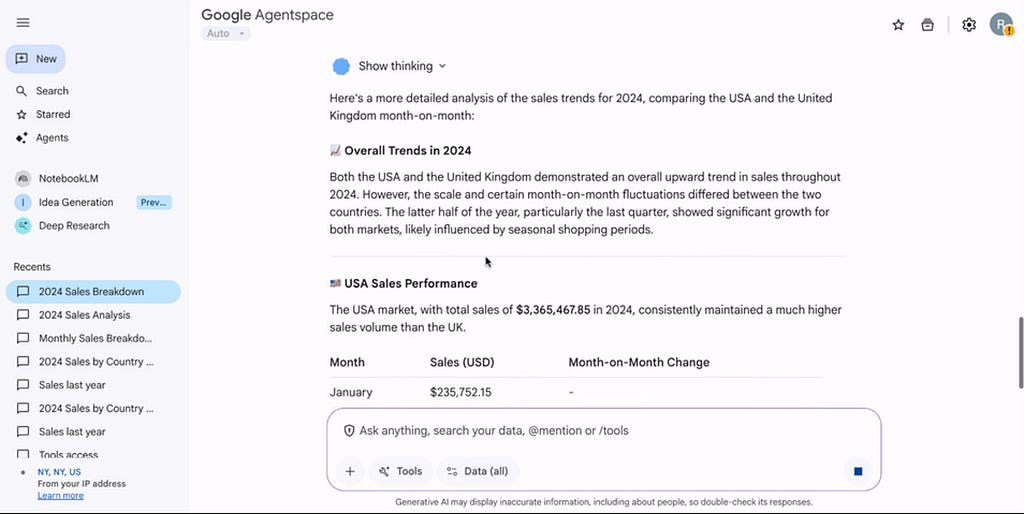
Google Data Cloud has seen key product enhancements this year to ensure that it integrates AI features, makes the data available in real-time to Agents, along with other support for core stuff like Vectors, multimodal data support and more. To get a solid recap of all the innovations introduced in Google Data in this area, check out this post that highlights and points out the trends in 2025.
Containers & Kubernetes
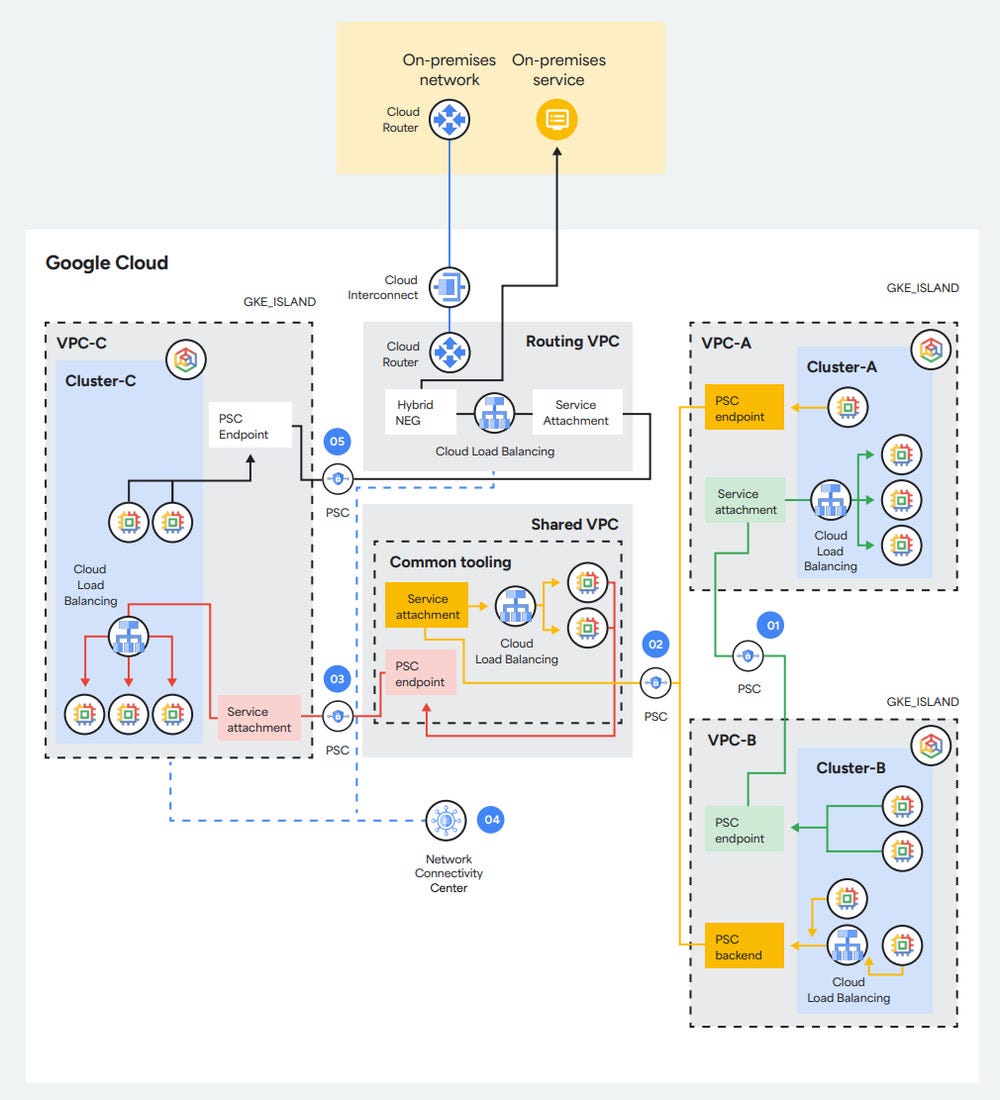
If you are migrating to GKE from on-prem or other clouds, you might be used to “island mode” networking. This post decodes GKE’s flat network model, explaining the benefits of native VPC integration for Pods. It provides design patterns for adapting your existing IP management strategies to GKE’s architecture, ensuring a smoother migration without IP exhaustion issues.
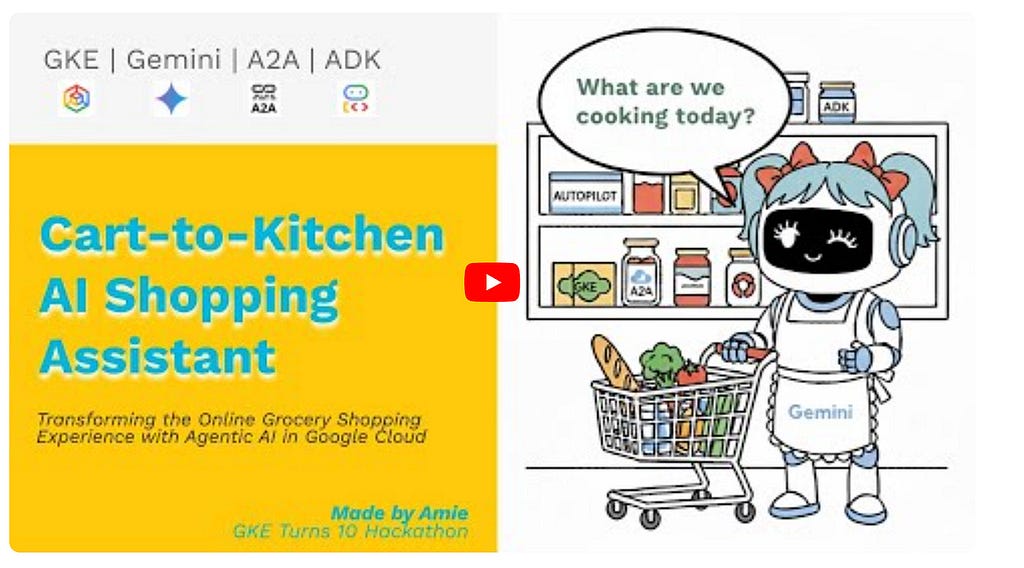
Check out the winners from the recent GKE Hackathon to see what people are building. It highlights interesting projects that use Kubernetes to scale apps or run AI models. The Grand Prize winner, Cart-to-Kitchen, which is an AI assistant that analyzes your grocery cart to suggest recipes, showcasing how to orchestrate multi-agent systems on Kubernetes. Check out the winners.
Identity & Security
The Cloud CISO Perspectives report for 2026 highlights two major shifts: the rise of Agentic Security automation and the critical need for AI fluency as a defense. It predicts that AI agents will soon handle data correlation and incident response, allowing human analysts to focus on high-level strategy.
As agents begin to interact with Web3, managing private keys becomes the critical risk. This post explores using MCP to securely connect agents to blockchain wallets, ensuring that the agent can propose transactions but requires a signed approval or a trusted execution environment (TEE) to finalize them.

Moving an AI project from an experiment to a real product requires good security. This article outlines a checklist for protecting your AI. This guide outlines the AI Security Foundation, focusing on securing:
- The infrastructure (GKE/Cloud Run)
- The data (using sensitive data protection)
- The model
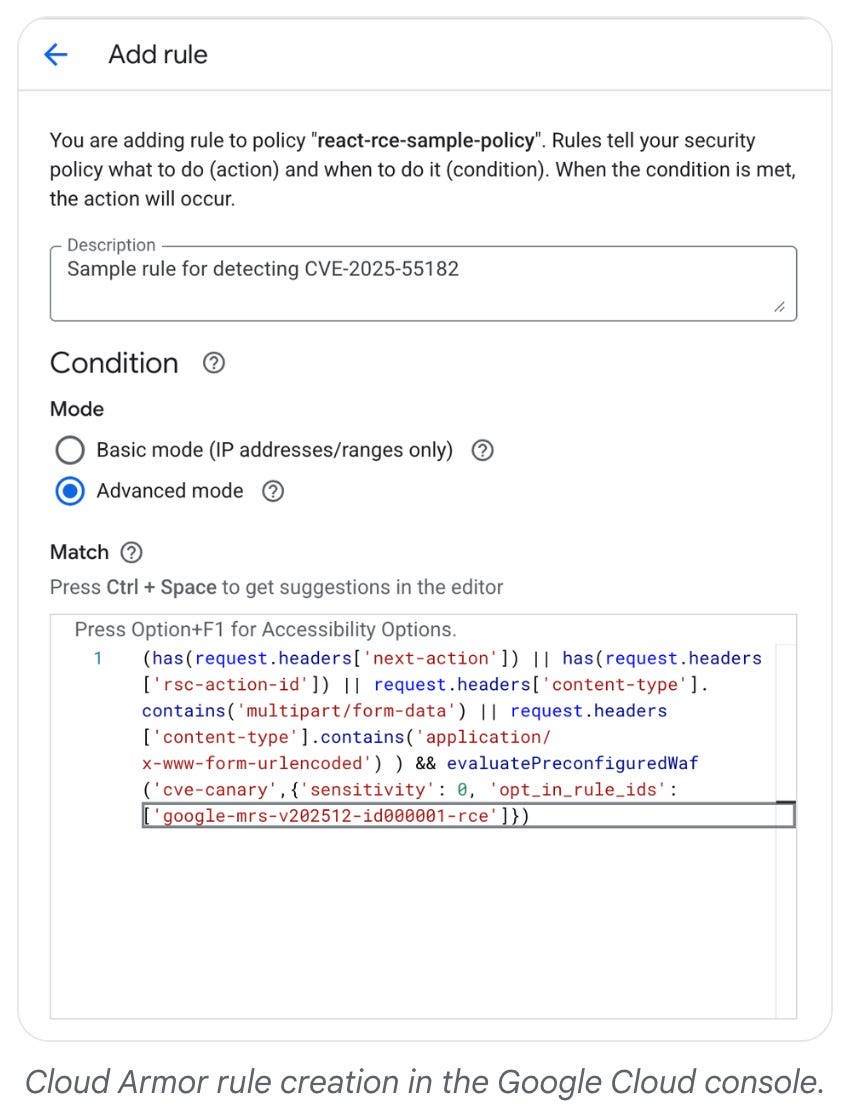
You should have already acted on this if you were affected, but a critical Remote Code Execution (RCE) vulnerability (CVE-2025–55182), dubbed React2Shell, has been discovered in React and Next.js. Google Cloud has released specific Cloud Armor WAF rules to detect and block exploitation attempts. The post details the vulnerability and provides immediate mitigation steps. You are strongly advised to patch your React versions and apply the new WAF rules.
Networking
Observability is a tough feature when it comes to multi-cloud architectures. Enter VPC Flow Logs, to gain visibility in the network traffic that goes between Google Cloud and other providers. By analyzing these logs, you can troubleshoot connectivity issues, monitor data egress costs, and detect anomalous traffic patterns across your entire hybrid network. Check out the blog post.

Compute
The rush to adopt AI has also resulted in both building out the infrastructure to support that and the key question whether we are utilizing the compute efficiently. A new report from IDC points out that there are gaps in the AI Efficiency. The report highlights how purpose-built infrastructure like TPUs and optimized GPUs, along with efficient orchestration are critical to closing the gap between AI aspirations and sustainable operational costs.
Developers & Practitioners
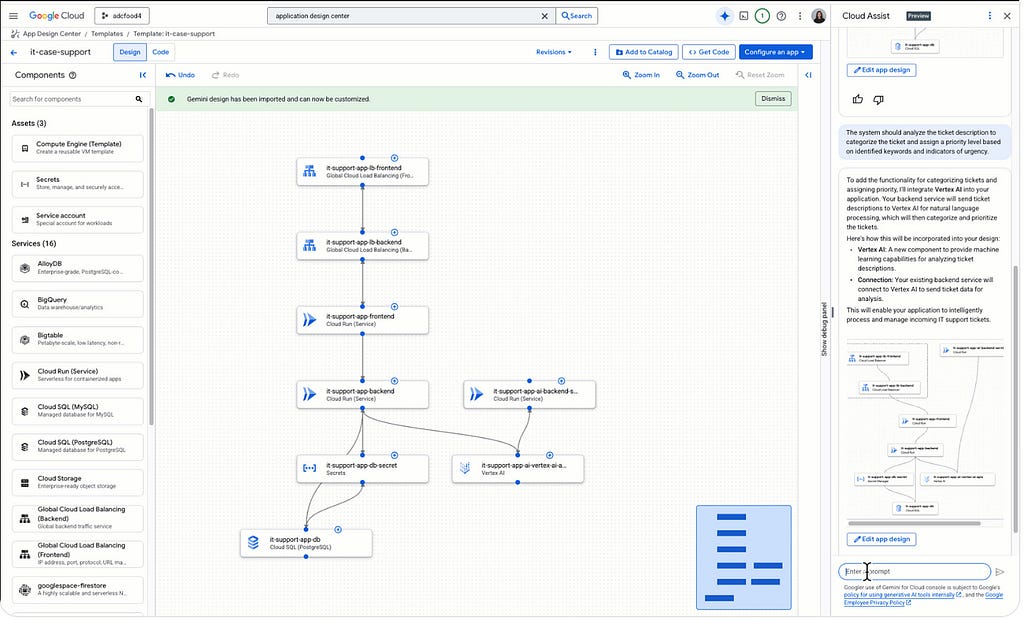
Google has launched the Application Design Center in General Availability (GA). It is a unified control plane for designing and deploying applications. It integrates with App Hub and uses Gemini Cloud Assist to help you draft architecture using natural language. A key feature is allowing you to import existing Terraform configurations and manage them with GitOps best practices. Check out the blog post.
The best way to know if your backup plan works is to break things on purpose. This guide shows you how to use “Chaos Engineering” to simulate a disaster. By turning things off or causing errors intentionally, you can prove that your recovery plan actually works before a real emergency happens. Check out the blog post.
Learning Center
If you have some free time over the holidays, Google is offering free AI training courses. It’s a good chance to learn the basics of Generative AI or get better at writing prompts without spending any money. Check out the blog post.

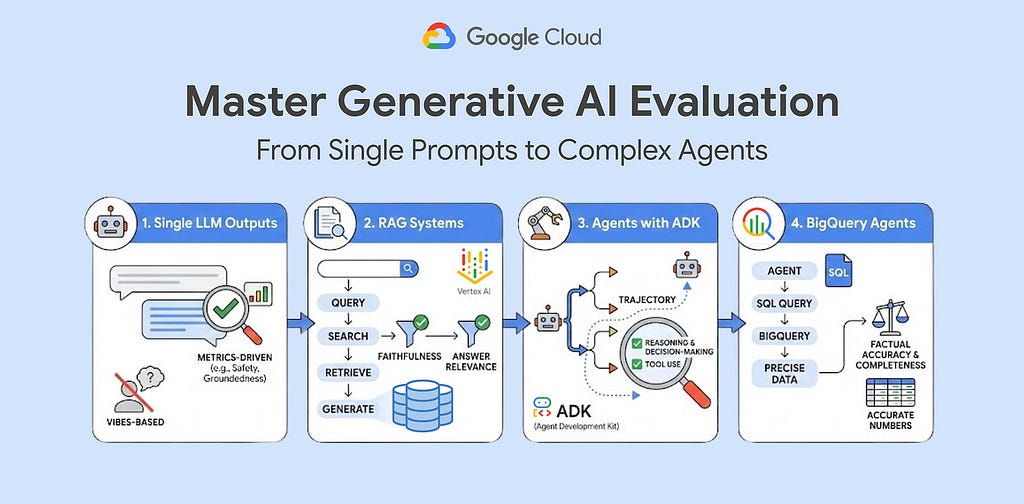
We have a couple of other tracks if you are interested in learning more about Gen AI Evaluation and Building Connecteing Agents with MCP and A2A.
The 1st guide is a comprehensive guide walks through the maturity curve of evaluation, starting with simple single-prompt testing and advancing to complex, multi-turn agent evaluation. It details how to use Vertex AI Evaluation services and more.
The 2nd guide highlights that the future of AI is not just a single super-bot but a team of specialized agents working together. It demonstrates interoperability, exploring the standard patterns for connecting agents to data, tools and each other.

Write for Google Cloud Medium publication
If you would like to share your Google Cloud expertise with your fellow practitioners, consider becoming an author for Google Cloud Medium publication. Reach out to me via comments and/or fill out this form and I’ll be happy to add you as a writer.
Stay in Touch
Have questions, comments, or other feedback on this newsletter? Please send Feedback.
If any of your peers are interested in receiving this newsletter, send them the Subscribe link.
Google Cloud Platform Technology Nuggets — December 1–16, 2025 was originally published in Google Cloud – Community on Medium, where people are continuing the conversation by highlighting and responding to this story.
Source Credit: https://medium.com/google-cloud/google-cloud-platform-technology-nuggets-december-1-16-2025-88eef885c7f7?source=rss—-e52cf94d98af—4
About the Author