
You can’t buy a domain name forever because domain registration is time-limited, typically capped at 10 years.
What “domain name forever” actually means is keeping long-term control by renewing the domain continuously without interruption.
In practice, this means you buy a domain name for the longest available term, enable auto-renewal, and keep your billing and contact details up to date so renewal never fails.
Most domains are lost due to missed renewals, expired payment methods, or outdated account information, not because ownership expires by design.
While alternatives like blockchain domains or “lifetime” services exist, they don’t offer the same universal support or control as standard domain registration.
Long-term domain control comes down to a few practical steps: choosing the right registrar, setting up reliable renewal, and protecting your ownership against common risks.
1. Search for an available domain name
Search for an available domain name by entering your idea into one of the best domain name generators, like Hostinger.
You type your desired name into Hostinger’s domain name search tool, and it shows instantly whether the domain is available or already taken.
If it’s taken, the tool suggests close alternatives and different extensions such as .com, .net, .org, .io, or .ai, so you can still secure a usable version of your name.
Pick a domain that you can keep for years without changing. Keep it short, easy to spell, and easy to say out loud.
For example, “brightstudio.com” works better than “bright-studio123.net.” Avoid hyphens and numbers because people forget them or type them wrong.
Stick with widely recognized extensions like .com when possible, since they are easier for people to trust and remember.
At this stage, ensure WHOIS privacy protection is enabled so your personal contact details are not exposed in public records. Before you register the domain, check that the name is not trademarked in your country by searching your national trademark database.
This step protects you from legal disputes and prevents you from building on a name you may be forced to give up. Choosing the right domain name helps you avoid legal issues and keeps your brand stable over time.
2. Select the right domain registrar for long-term ownership
Long-term domain ownership depends on choosing a registrar that keeps your domain active through reliable renewal and gives you full control over it.
Start with renewals, because this is where most domains are lost. Your registrar must handle renewals in a way that removes gaps and reduces the need for manual action:
- Auto-renewal must be easy to enable, so your domain renews automatically before it expires.
- Multi-year registration should be available, up to 10 years, so you can extend your domain in advance and reduce how often you need to renew.
- The renewal process must be clear, so you always know your expiration date and what will happen next.
The best domain registrars are ICANN-accredited. ICANN is the global organization that manages domain name registration, and it only allows approved companies to register and control domains.
When your registrar is ICANN-accredited, your domain follows a standard system, so you can renew it, transfer it, or recover it if something goes wrong.
Your personal data also needs protection. WHOIS is a public database that lists the contact details of domain owners, including name, email, and address.
Without protection, this information is visible to anyone. WHOIS privacy hides these details, reducing spam and lowering the risk of someone targeting your domain account.
3. Register your domain with the maximum possible duration
Securing a domain long-term starts by registering it for the maximum allowed period of up to 10 years.
Domains cannot be registered permanently. Long-term control comes from extending the registration period as far as possible and continuing to renew it.
When you register your domain, choose the longest available period at checkout. Treat this as a prepaid renewal, not ownership. You are paying in advance to keep the domain active for several years without needing to take action.
Auto-renewal must be enabled after registration so the domain continues to renew when the initial period ends.
Domains are lost when renewals are missed, payments fail, or billing details become outdated.
4. Set up automatic renewals and choose renewal reminders
Auto-renew must be enabled immediately after registration. Manual renewal breaks down over time because it depends on memory, and missing a single deadline results in expiration.
Auto-renewal charges your saved payment method before the domain expires. If the payment is successful, the domain renews automatically and remains active.
The only point of failure is billing. If your payment method is outdated or the charge is declined, the renewal does not complete, and the domain can expire.
To keep renewal working consistently, you need a simple support system:
- Keep your payment method valid so the renewal charge succeeds.
- Watch for registrar emails, since they alert you to failed payments or required updates.
- Set a yearly reminder to check your domain status before the expiration date.
5. Consider purchasing private registration and domain locking
Domain security depends on protecting your ownership data and preventing unauthorized changes to your domain.
WHOIS domain privacy is the first layer. It keeps your contact details out of public records, reducing the risk of your domain account being targeted.
The next layer is domain locking. A locked domain cannot be transferred or modified without your approval, which blocks unauthorized transfer attempts. This protects your domain from being moved to another account or registrar without your consent.
These protections reduce the risk of losing your domain through external interference, such as account compromise or unauthorized transfers, rather than expiration.
Pro Tip
Secure your registrar account with two-factor authentication. Your domain is controlled through this account, so adding a second login step makes it much harder for anyone to take it over.
6. Understand legal options for permanent domain ownership
Domains cannot be owned permanently. You control them through ongoing registration, backed by legal and contractual rules.
“Permanent ownership” in practice means strengthening your legal claim to the domain, not removing the need to renew it. The goal is to make your control harder to challenge or take away.
Trademark protection is the strongest legal layer. Registering a trademark for your name gives you enforceable rights, which you can use to defend your domain or recover it in a dispute.
For example, if someone registers a domain that matches your brand, a registered trademark gives you a clear path to claim it.
For higher-value domains or shared ownership, control can be structured so that no single person can lose or take over the domain on their own. This is where domain escrow and trusts are used.
Domain escrow acts as a neutral third party that holds control of the domain during transactions or shared ownership.
For example, if you are buying a valuable domain, escrow ensures the seller only gets paid after the domain is transferred to you. In ongoing use, it can also prevent one party from moving or selling the domain without the other party’s consent.
Trusts are used when a domain is tied to a business or long-term project. Instead of one person owning the domain, it is held under a legal structure that defines who controls it and what happens if someone leaves the company or loses access.
This avoids situations where a domain is stuck in a personal account or controlled by the wrong person.
This protection only works if the domain is still active. If you forget to renew it and it expires, you can lose it even if you have legal rights to the name.
Why buying a domain name forever matters
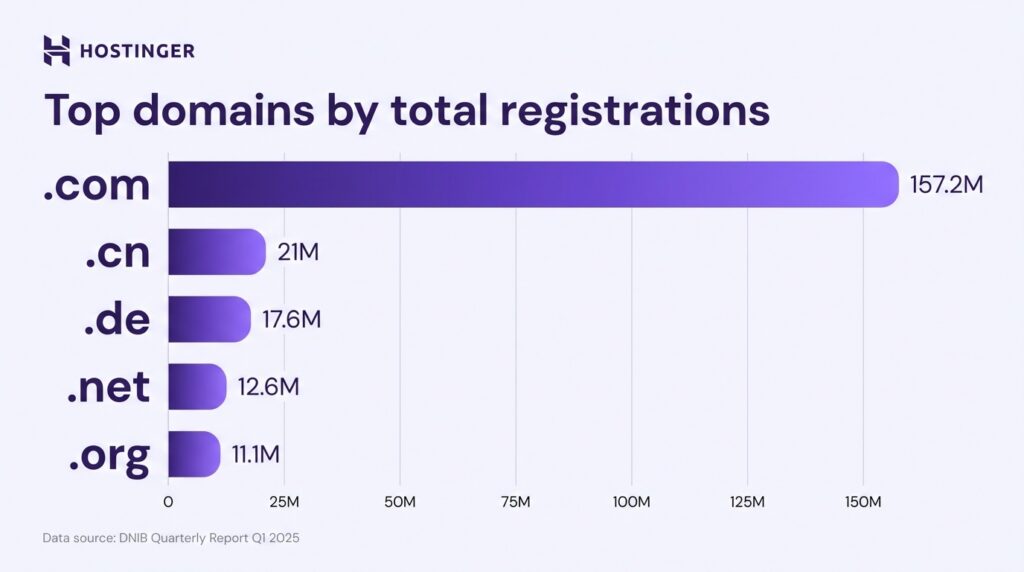
There are over 368 million registered domain names worldwide, which shows how competitive domain ownership has become and how quickly a lost domain can be taken by someone else.
Domains are lost for simple reasons: the registration expires, a payment fails, or account and ownership details are no longer valid.
When that happens, the impact is immediate. Your website goes offline, and any email addresses using that domain stop working. Customers can no longer reach you, which damages trust and disrupts your business.
Losing a domain also breaks your brand. If your main domain disappears, you may be forced to switch to a new name, update all your links, and rebuild recognition from scratch.
In some cases, the expired domain is picked up by someone else and resold at a higher price or used for their own purposes.
The SEO impact is just as serious. Search rankings tied to your domain disappear, backlinks stop working, and your traffic drops. Recovering from this means starting over and rebuilding authority all over again.
For example, a business that loses its domain may have to relaunch under a different name, while its old domain is bought and redirected elsewhere.
Emails sent to the old domain can be lost or intercepted, and returning customers may not know where to find the business.
Continuous control protects your website, your email, your brand, and your traffic. The domain itself is only one part of what you are protecting.
How to maintain your domain name ownership indefinitely
You maintain domain ownership indefinitely by combining renewal discipline, active monitoring, and legal protection.
1. Renew the domain strategically before expiration
Renew your domain well before the expiration date to reduce the risk of losing it.
When you renew, you choose how long to extend the domain for. This is where strategy matters.
Multi-year renewal means you extend the domain for several years at once, so you don’t have to renew it every year. Yearly renewal means you need to renew it each year, increasing the risk of missing a deadline.
2. Monitor domain status regularly
Regular monitoring ensures your domain remains active and under your control.
Check your registrar dashboard to confirm the domain is active, review the expiration date, and make sure your contact details and payment method are still correct.
Set simple reminders to review your domain before important dates and pay attention to registrar emails about billing or status changes.
3. Leverage legal protections like trademarks
Legal protection strengthens your claim to the domain name.
Registering a trademark tied to your domain or brand gives you a clear way to defend or recover it if someone else tries to use it. For example, if another person registers a domain that matches your brand, a trademark gives you grounds to claim it back.
This reduces the risk of losing your domain to third-party claims, especially if your domain is tied to a business or brand.
What to do after securing your domain name forever
Once your domain is secured, the next step is to put it to use and keep it active.
Connect your domain to hosting and configure DNS so your website becomes accessible online. This is what turns your domain from a name into a live site people can visit.
Set up email and SSL so your domain can send and receive messages and load securely in browsers. This allows you to use professional email addresses and builds trust with visitors.
Start using your domain across your brand, including your website, email, and any public presence. A consistent domain makes it easier for people to find you and recognize your business.
➡️If you need more detailed instructions on what to do next, you can follow our step-by-step setup guide on what to do after buying a domain name.
All of the tutorial content on this website is subject to
Hostinger’s rigorous editorial standards and values.
Apply for Premium Hosting
Source Credit: https://www.hostinger.com/in/tutorials/how-to-buy-a-domain-name-forever
About the Author