Are you tired of burning your budget on messy code loops and endless trial and error?
As the founder of Dhīmahi Technolabs, I am constantly optimizing AI adoption, business process automation, and technology portfolios for SMEs. While I reserve deterministic workflows for other tools, I consistently prefer Claude Code for rapid experimentation and early project iteration.
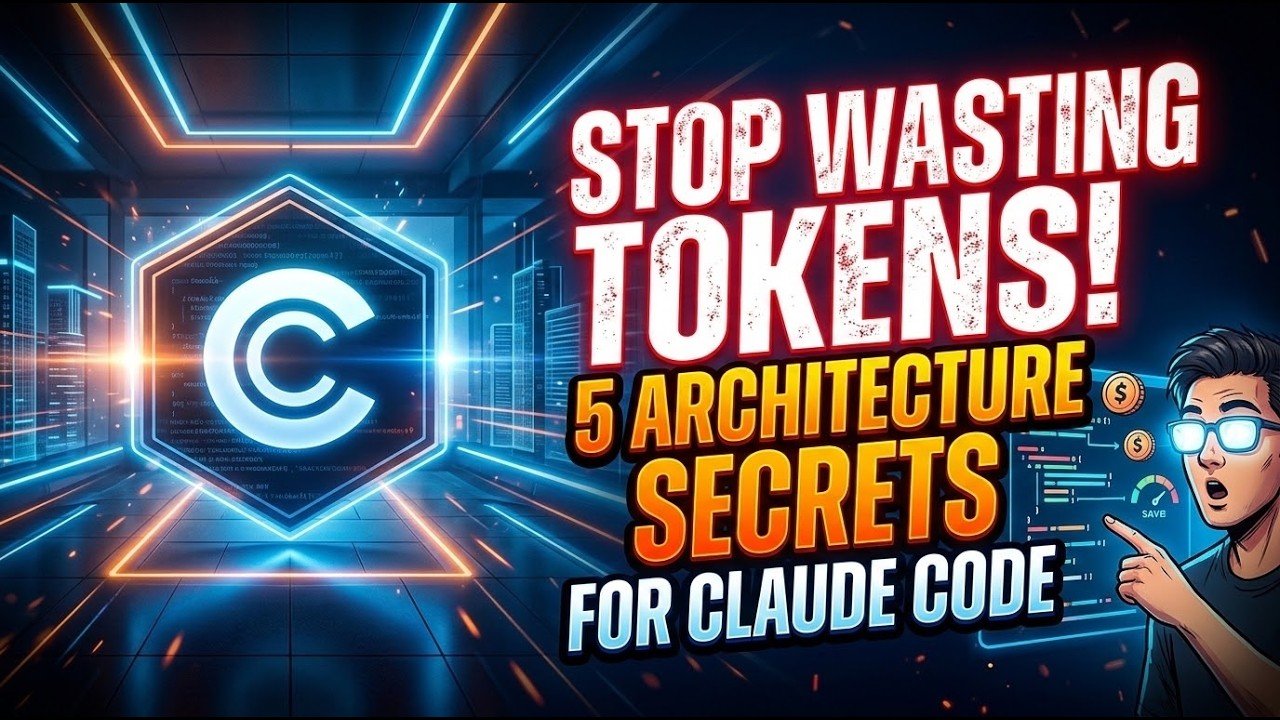
In today’s video, we are breaking down the **5 core architectural principles** to scale Claude Code efficiently and build the perfect autonomous agent lifecycle!
In this video, you will learn:
* NO.1 Inherit Clean Context: Why you must store project conventions and architectural guidelines in a `CLAUDE.md` file to stop repeating yourself in every session.
* NO.2 Plan Mode Before Code: Why diving straight into code is a major red flag, and how to use Plan Mode to align on boundaries and project goals first.
* NO.3 Cost-Aware Effort Levels: The truth about token costs—why “Medium” effort is the sweet spot, while “Max” effort doubles your baseline cost for a less than 1% increase in task completion.
* NO.4 Structured Loop Engineering: The 4 essential pillars to prevent infinite drift: Triggers, Explicit Tasks, Success Criteria, and Session Data Logging.
* NO.5 Dynamic Workflows & Subagent Fan-Out: How to safely spawn dozens of parallel subagents using architectures like Fan-out & Synthesize without blowing through your budget.
Mastering Claude Code isn’t about complex prompts. It’s about combining persistent context, disciplined planning, and cost-aware loops into one flawless workflow: Context ➔ Strategy ➔ Engine ➔ Scale.
Drop a like if this helped you save your tokens, and subscribe for more deep dives into AI automation and software architecture!
#ClaudeCode #AIAgents #SoftwareArchitecture #TokenOptimization #AIAutomation #contentcreator #trendingnow
Video Source
About the Author