
I’ve been known to use tech everywhere, even where it’s not really needed. But I have to say, AI agents really came in handy for my last trip. I want to share my story, and the playbook I used for an unforgettable trip.
This summer, my wife and I celebrated an anniversary milestone in Italy. The trip was 10 days long, spread across 3 cities: Positano in the Amalfi Coast, Naples, and Rome. We had a wonderful time, and the planning certainly helped!
Let’s break down the agentic workflow I used. I’ll cover the initial brainstorming phase, travel logistics, itinerary planning, and finally the checklist for feeling confident about it all.
https://medium.com/media/f23a670e62d5e6bbd3f6c47b9bfc9349/href
Getting started with Deep Research
Before drafting a single day on a calendar, every great trip begins with an exploratory phase. Before I even touched an agent, I had fun scrolling through plenty of Reddit threads (r/ItalyTravel) and reading articles.
At a certain point, you’re going to run into information overload. How can you distill all of these great ideas into what you need to do? Enter Gemini Notebook.
The first thing I did was use Deep Research to scour across data sources. I now had a chat interface where I could ask all kinds of questions.
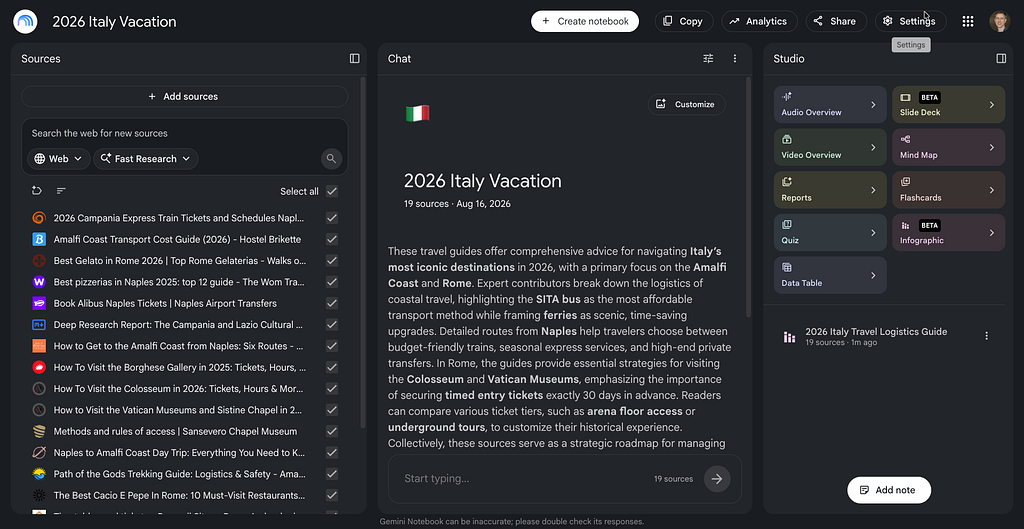
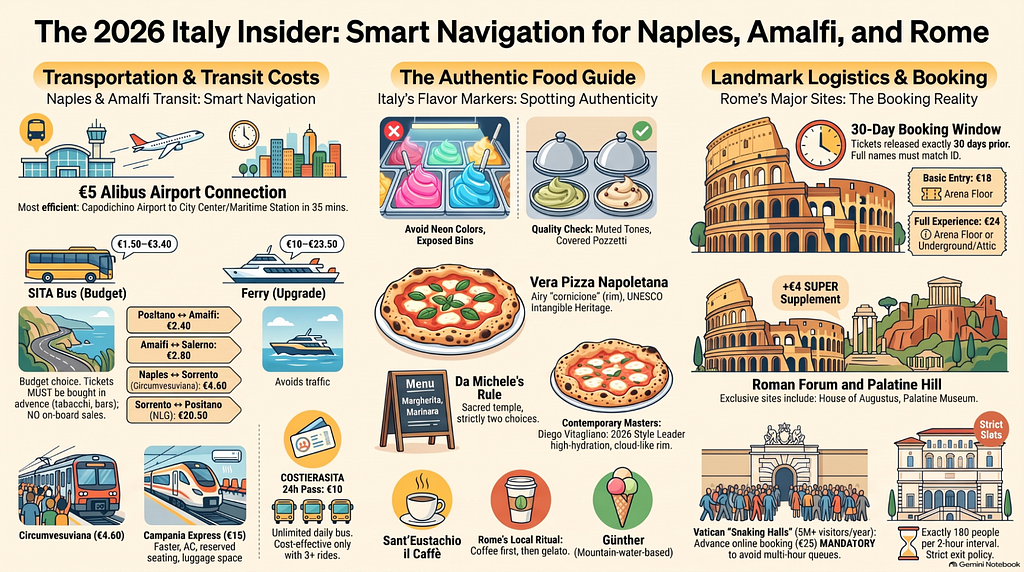
One of the features that made Gemini Notebook famous was the Audio Overview (or podcast) feature. You can tune into two hosts discussing your favorite topic at convenience. But there’s much more you can create, like flashcards, quizzes, and reports. It even can create infographics like this:
Architecting the itinerary
With a base of understanding in place, our next step was to shape our trip. What were the key places to see? How many days should we spend in each city?
A great trip should be looked at as just a checklist of sights. The flow needs to take into account the timing, geography, and your energy levels. August is generally a hot season in Italy, and Italy’s major cities were on the highest heat alert in 2026.
We asked Gemini to consider these nuances:
Act as an expert travel logistics architect. Design a 10-day itinerary for 2 adults starting at Rome FCO, traveling to Positano, Naples, and Rome. Group activities by neighborhood, factor in August heat, and minimize backtracking.
The model surfaced tactical adjustments that generic guides might overlook For example, it recommended Herculaneum over Pompeii for a blistering hot day: both world-class sites nearby Naples, but Herculaneum would fit better with some mobility challenges we were working through. Gemini sequenced the days around key events, filling in with a full itinerary:
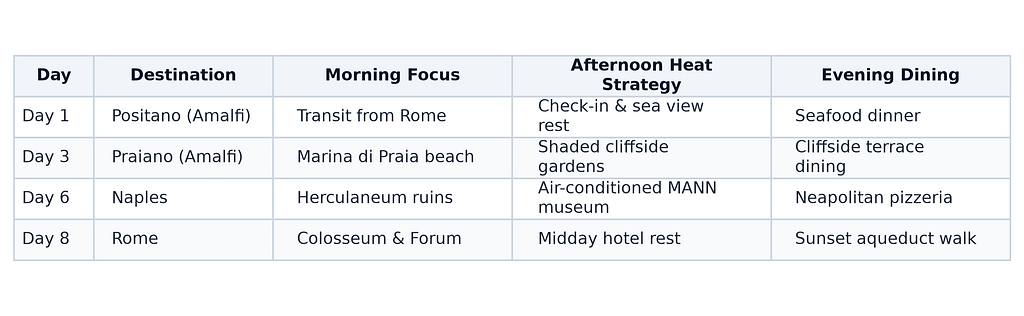
From there, Antigravity integrated with Google Calendar, so I had everything I needed at a glance on my phone. Gemini flagged that some of the attractions sold out quickly, so I added reminders such as signing up for the Colosseum 30 days before.

Transit Logistics
One of the most stressful parts of international travel is stitching together connections. On arrival day, our route required landing at Rome FCO, taking an express airport train, catching high-speed rail, and meeting a driver.
Instead of guessing connection times, I asked Gemini to calculate realistic buffers and analyze ticket flexibility rules:
Analyze transit options from Rome FCO Airport to Positano on a Tuesday morning. Calculate conservative buffers for passport control, baggage claim, and station transfers. Provide fallback options for flight delays.
One of the great features in Antigravity is the Browser agent, which can open up Chrome and operate it for you. Antigravity accessed the Trenitalia website to search for connections:
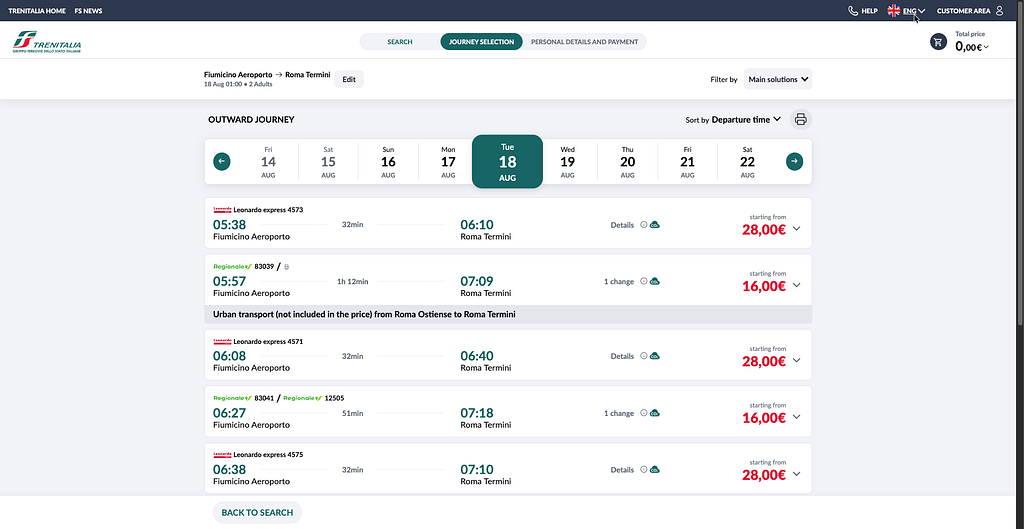
It made a sensible set of recommendations. It even went deep into the policies of the tickets to uncover that the tickets are valid for a 4-hour window. That helped us pick an earlier ticket just in case we arrived early, without being worried about missing our connection.
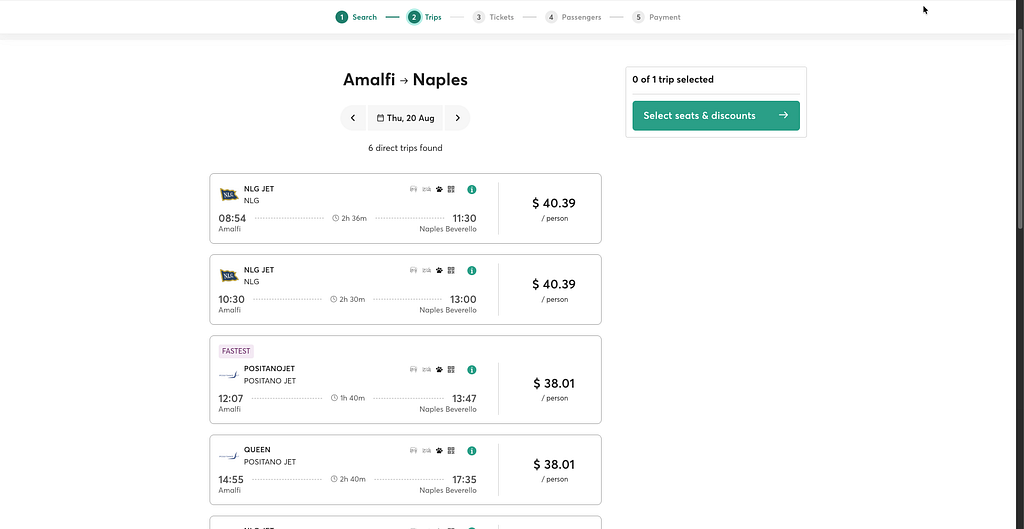
On our way back from Amalfi to Naples, we took a ferry. Aggregator websites like Ferryhopper can make finding the right ferry easier. Even then, it wasn’t totally clear why some ferries might take an hour vs others that would take two hours. Gemini was very helpful in researching what extra stops were being made.
Feeling confident
The ultimate test of travel planning is stepping onto the plane feeling fully prepared and organized. Gemini helped with a checklist to ensure we had everything in order: power adapters, international phone coverage, and much more.
The checklist, along with all of our travel information, was stored in a structured markdown file. I could access it at any time from a Google doc, due to its Google Docs Markdown support.
To enable this feature, turn on Markdown under Tools > Preferences in Google Docs, then upload your .md file or right-click to paste formatted text.
Also, once you created this doc in the Google Docs mobile app, tap the document options menu and select “Make available offline”.
This creates a clean, clickable travel hub that stays fully responsive on your phone, even in airplane mode or underground metro tunnels.
Your travel planning playbook
AI agents are most useful when they work for you, going beyond surface-level recommendations in a prompt.
To recap this workflow for your next journey, follow this four-part playbook:
- Perform deep research and ingest docs into Gemini Notebook to brainstorm on your plan.
- Personalize your journey with your unique preferences and any constraints.
- Direct Antigravity to make travel arrangements using its Browser agent, synced to your calendar.
- Export your main Markdown file into an offline Google Doc that is accessible anywhere.
Do you have any stories to tell about travel planning with AI? I’d love to hear about them on X, LinkedIn, or Bluesky.
How I Planned an Italy Trip with an Agentic Workflow was originally published in Google Cloud – Community on Medium, where people are continuing the conversation by highlighting and responding to this story.
Source Credit: https://medium.com/google-cloud/how-i-planned-an-italy-trip-with-an-agentic-workflow-004346e81aac?source=rss—-e52cf94d98af—4
About the Author