
Welcome to the October 16–31, 2026 edition of Google Cloud Platform Technology Nuggets. The nuggets are also available on YouTube.
AI and Machine Learning
An Anthropic-managed deployment option for Claude Models on Google Cloud is now in General Availability (GA). It gives teams teams a choice between Anthropic-managed and Google-managed architectures. While both options provide day-zero access to frontier models like Claude Fable 5.1, Sonnet 5.5, Haiku 5.5, and Opus 5.5 with standard billing and commitment drawdowns, the Anthropic-managed tier features day-zero platform tools and runs under Anthropic’s commercial terms, whereas the Google-managed tier offers strict data residency, security controls, and native Google Cloud integrations. Check out the blog post.

Claude Opus 5.5 and Claude Sonnet 5.5 are now available in Google Antigravity for Google Cloud customers, allowing developers to choose them alongside Google’s Gemini models across the Antigravity CLI, IDE extensions, and Antigravity 2.0. Administrators can enable these partner models on a pay-as-you-go billing basis, unlocking advanced multi-model engineering patterns such as cross-model verification and specialized subagent delegation.
Its not just Claude Models, but Open AI models are now available too, in private preview by request. OpenAI models, specifically GPT-6 Astra, GPT-6.1 Sol, and GPT-6 Luna, into its Model Garden, making it the only hyperscale cloud provider to offer all three leading closed-source LLM families. The integration allows enterprise customers to run these models with unified billing through Google Cloud Marketplace, strict data governance, and robust security perimeters. Check out the blog post.
A public preview of Gemini Robotics Embodied Reasoning 2, an advanced intelligence model designed to function as a robot’s high-level brain, is now available in Google Cloud. The model combines spatio-temporal video understanding, long-horizon planning, and agentic tool orchestration across any robot embodiment, from stationary arms to humanoids, allowing enterprises to simulate, train, and deploy safe, adaptive physical AI at scale. Check out the blog post.

Google was named a Leader in the inaugural IDC MarketScape: Worldwide Agentic AI Platforms 2026 Vendor Assessment. Check out the blog post and download the IDC MarketScape: Worldwide Agentic AI Platforms 2026 Vendor Assessment excerpt.

Data Analytics
If you’d like to skip the line and go straight to the news on all things in Google Data Cloud, check out the “Whats New withData Cloud” link and bookmark it.
Knowledge Catalog is a unified context graph that connects trusted business metrics and semantic models from various data tools into one place. It helps AI agents like Gemini provide accurate, reliable, and governance-backed answers without making up numbers. Check out this announcement that discusses how Knowledge Catalog, now connects trusted business definitions and metric models from popular tools like Looker, dbt, Snowflake, and Databricks into a single unified context graph to make AI agents like Gemini significantly more accurate, faster, and reliable.

BigQuery ObjectRef is now generally available. It allows data teams to analyze unstructured data, such as images, videos, audio, and documents , stored in Cloud Storage directly within BigQuery using standard SQL. By treating unstructured files as native columns and integrating them with Gemini models and AI functions, organizations can seamlessly run machine learning inference, build full-fidelity ETL pipelines, and power conversational analytics without needing separate compute clusters or complex data movement. Check out the post.

Databases
Fully managed blue-green deployments for Cloud SQL (starting with MySQL) are now available in preview. The goal of this feature is to convert a major version upgrade to a streamlined, low-downtime daytime operation. Features like continuous environment synchronization, pre-cutover testing with real production data, and sub-second maintenance switchovers for Enterprise Plus users is what makes this possible. Check out the blog post for more details.

Upgrading embedding models in a database is particularly challenging due to incompatibility, re-indexing, possible downtime and multiple other reasons. Check out a comprehensive, step-by-step guide for database administrators and developers on how to upgrade production vector embedding models in AlloyDB AI without causing application downtime or disrupting user queries. This guide demonstrates how to leverage native PostgreSQL primitives, auto embeddings, ScaNN indexing, and seamless traffic cutover strategies to upgrade/modernize semantic search infrastructure safely and efficiently.
Containers and Kubernetes
A complex, multi-layer networking outage in Google Kubernetes Engine (GKE) clusters in early 2026, where developer pods intermittently failed to reach the Kubernetes API server. Check out the article that details how a combination of three distinct bugs, packet reordering in Google’s networking fabric, Envoy’s half-closed connection handling keeping sockets in FIN_WAIT_2 indefinitely, and a Linux kernel bug in handling old-but-acceptable ACKs, interacted with Private Service Connect NAT to cause widespread timeouts.

Google Cloud’s VPC Flow Logs enrich network logs with Google Kubernetes Engine (GKE) metadata, allowing operators to track traffic by workload, namespace, and pod rather than ephemeral IP addresses. It plays a good role in troubleshooting GKE workloads faster and a detailed writeup provides you how you can use this today.

GKE Dataplane V2 is an optimized, high-performance networking stack for Google Kubernetes Engine (GKE) built on eBPF (Extended Berkeley Packet Filter) technology. This article explores how GKE Dataplane V2 scales Kubernetes networking to support high densities of concurrent, autonomous AI agents and code-execution sandboxes. It covers the network identity scaling challenges caused by rapid pod churn and high-cardinality labels.

Cost Management
Google Cloud has announced the general availability of spend caps on Google Cloud Budgets, introducing three key updates:
- A new spend caps API for automated guardrails
- Real-time visibility through live cost reports for faster root-cause analysis
- Automated monthly resets that eliminate the need for manual overrides.
Understanding and implementing these features is important because they provide a defense mechanism , working alongside early anomaly detection, to protect workloads against runaway cloud and AI costs instantly and programmatically, without risking the accidental deletion of vital resources. Check out the blog post.

AI Infrastructure
If you’d like a quick read on all the updates in AI Infrastruture segment in Google Cloud, bookmark this link.
First up, is the introduction of a new compute engine and this time, specifically for Agents. Looking to run AI agents at scale without the heavy overhead of traditional virtual machines? Google Cloud has introduced Agent Compute Engine, a new compute service built specifically for AI agents that provides hardware-isolated microVMs with container-like speed. Its brings several features like fast and efficient scaling, strong security without credentials, governed identities, memory optimization and persistent workspaces. For more details, check out the blog post.

There are a number of updates in this edition on AI Infrastructure. Next up is TorchTPU, which is Google’s native PyTorch stack for Google TPUs, is now open-source on GitHub. This makes TPUs a first-class, native hardware option alongside GPUs and CPUs. This was co-developed with Meta and integrated across major AI frameworks , including Hugging Face, vLLM, SGLang, TorchTitan, Ray, and LiteRT. This release enables developers to train, serve, and deploy models natively on TPUs using standard PyTorch workflows and familiar APIs.
Some more news from the PyTorch Conference. llm-d 1.0 is an open-source, Kubernetes-native serving stack designed to manage and scale distributed Large Language Model (LLM) inference across mixed fleets of GPUs and Google Cloud TPUs, has been announced. It is purpose-built to handle modern agentic workloads and reinforcement learning rollouts, which frequently feature long-context sharing and heavy traffic bursts that break traditional round-robin load balancers. Check out the blog post.

Developers & Practitioners
An AI agent skill is a modular package of instructions, scripts, and references (often anchored by a SKILL.md file) that steers an AI agent's reasoning loop, tool selection, and execution path for specific tasks. Building upon this, the official Google Agent Skills repository scales this concept to over 170 community-contributed capabilities, and this article details how Google treats these skills like living products by enforcing automated CI/CD conformance gates, strict semantic versioning, evaluation suites with atomic expectations, and an AI review agent.

The MCP Apps standard (SEP-1865) is an open extension to the Model Context Protocol that allows AI tools to pair backend functionality with live, interactive user interfaces (such as single-file HTML widgets) directly inside chat platforms via sandboxed iframes. Check out this article, that acts as a practical implementation guide for developers on how to build, securely authenticate via a dual-layer IAM and OAuth setup, deploy on Google Cloud Run, and register custom MCP apps as data store connections within Gemini Enterprise.

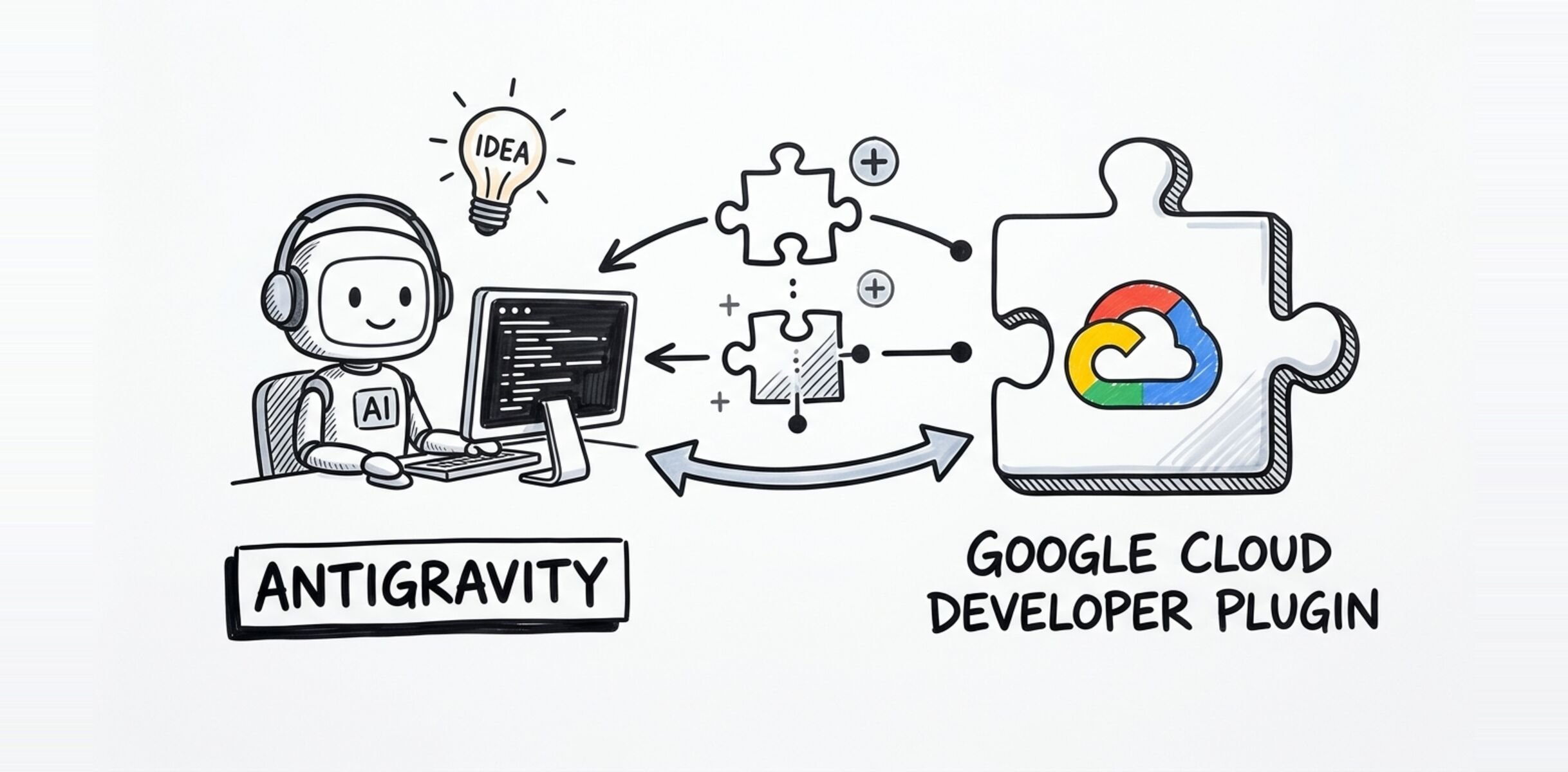
Check out the article “Four evaluation engineering lessons learned from building agent plugins”, where you can learn about strategies for testing non-deterministic AI agent systems, by drawing on lessons from the Google Cloud Developer plugin. This matters because building reliable production-grade agents requires rigorous measurement rather than one-shot demos that fail to catch silent errors or destructive behaviors. The article providers core practices:
- Grading raw tool-call trajectories rather than final summaries, preserving turn structures to handle asynchronous parallel tool dispatch correctly
- Running side-by-side live and plan-only evaluations to uncover both execution constraints and hidden reasoning flaws
- Establishing durable golden sets curated by experts to serve as continuous integration baselines against model churn.

Security and Identity
Disclosed by PHP and Wiz Research, two critical core PHP language runtime vulnerabilities (CVE-2026–109618 and CVE-2026–109619, assigned a CVSS severity score of 9.2) expose applications across versions 5.4 through 8.5.11 to unauthenticated remote code execution and memory disclosure. It is important to read this Google Cloud Blog advisory because it provides essential, step-by-step remediation guidance, including emergency runtime hardening, automatic serverless patch behaviors, WAF mitigations with Cloud Armor, and monitoring strategies.
Google Cloud introduced IAM Helper, a tool designed to help autonomous software agents manage security and access permissions securely. It automates complex tasks like troubleshooting permission errors, testing policy changes, and granting temporary access, making it easier and safer for AI agents and developer pipelines to work in the cloud. Check out the blog post.
The second Cloud CISO Perspectives for October 2026 is out. The key topic in the bullet is the introduction of Google Cloud’s new $250,000 “Root-in-Cloud” tier for its Vulnerability Reward Program (VRP).
Learn about Google Cloud
Google Cloud has launched free, industry-specific video learning bundles on Google Skills for financial services and legal professionals:
- Financial Services: Four courses focusing on advisor insights, portfolio resilience, bond issuance, and credit markets.
- Legal Operations: Five courses covering regulatory horizon scanning, DSAR responses, contract review, redaction, and NDA drafting.
Check out the details.
Write for Google Cloud Medium publication
If you would like to share your Google Cloud expertise with your fellow practitioners, consider becoming an author for Google Cloud Medium publication. Reach out to me via comments and/or fill out this form and I’ll be happy to add you as a writer.
Stay in Touch
Have questions, comments, or other feedback on this newsletter? Please send Feedback.
If any of your peers are interested in receiving this newsletter, send them the Subscribe link.
Google Cloud Platform Technology Nuggets — October 16–31, 2026 was originally published in Google Cloud – Community on Medium, where people are continuing the conversation by highlighting and responding to this story.
Source Credit: https://medium.com/google-cloud/google-cloud-platform-technology-nuggets-october-16-31-2026-08c240222e45?source=rss—-e52cf94d98af—4
About the Author