For the last few years, the enterprise conversation around Artificial Intelligence has been dominated by personal productivity: using AI for search, drafting documents, personalizing emails, and generating images. But as AI technology becomes faster, more capable, and deeply integrated into our workflows, we are crossing a new frontier.
At Supernova 2026, I gave a sneak preview of how AI is about to fundamentally transform business operations. The secret doesn’t lie in just making developers code faster, nor is it merely about analyzing legacy applications.
Now, everyone — including you — can test business ideas immediately. Welcome to the era of “AI coding” and the rise of enterprise micro-applications.
Disclaimer: I work at Google in the cloud team. Opinions are my own and not the views of my current employer.
Stop Waiting for Prototypes: The Power of “Vibe Coding”
Imagine you have a brilliant idea to solve a persistent customer friction point. Traditionally, you would have to write a brief, pitch it, disrupt your engineering teams with a half-baked concept, and wait two to three weeks just to see a wireframe.
Today, this is vibe coding — using natural language to build a working model straight from your desk. It’s about shortening the distance between an idea and a prototype from a weeks-long project into a real-time conversation.
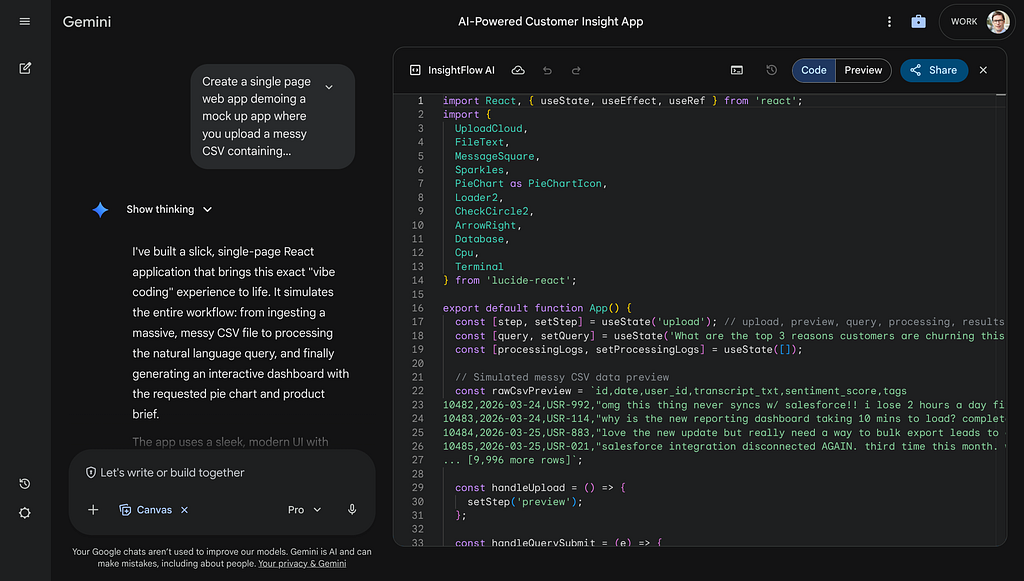
The landscape of AI coding tools is diverse, offering everything from highly technical agentic systems to user-friendly options tailored for business professionals. Interactive workspaces (like Gemini Canvas) are designed for AI projects that require editing, refining, and visualizing code in real-time. With these tools, we can translate ideas into functional prototypes in minutes.
By prompting an AI model, you can watch the screen split: interaction on the left, code and a live, working preview on the right. Validation isn’t just about the backend anymore; it’s about the experience. If it doesn’t work, you haven’t wasted an entire engineering sprint — you’ve just spent some time refining your prompt.
The “Missing Middle” and the Rise of Micro-Applications
It’s great to test out new ideas, but how does this help you run your business better on a Tuesday morning?
Right now, there is a massive “missing middle” in the market. On one side, you have personal productivity tools (like chat windows) for simple summaries. On the other side, you have specialized, custom AI agents that take months to build.
Most business problems live in the middle. Organizations desperately need tools that go beyond personal chat, but aren’t complex enough to justify a full-scale engineering project. To see why the middle matters, let’s look at two ways to handle a common task: analyzing customer sentiment.
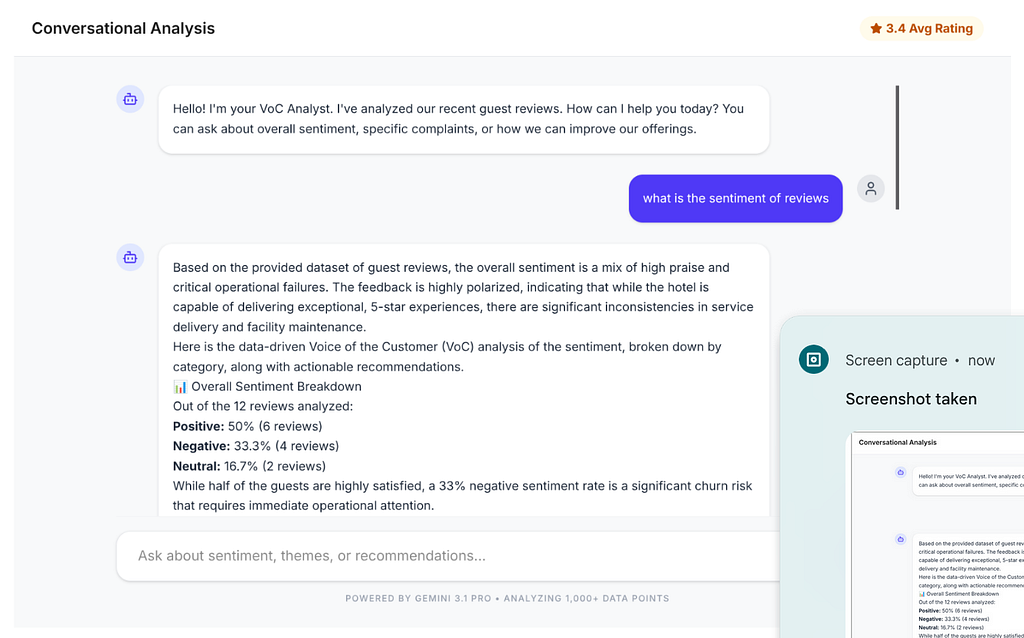
- Example A: The Chat Window. A clean, conversational interface for ad-hoc queries. Great for simple tasks, but limited in scope.
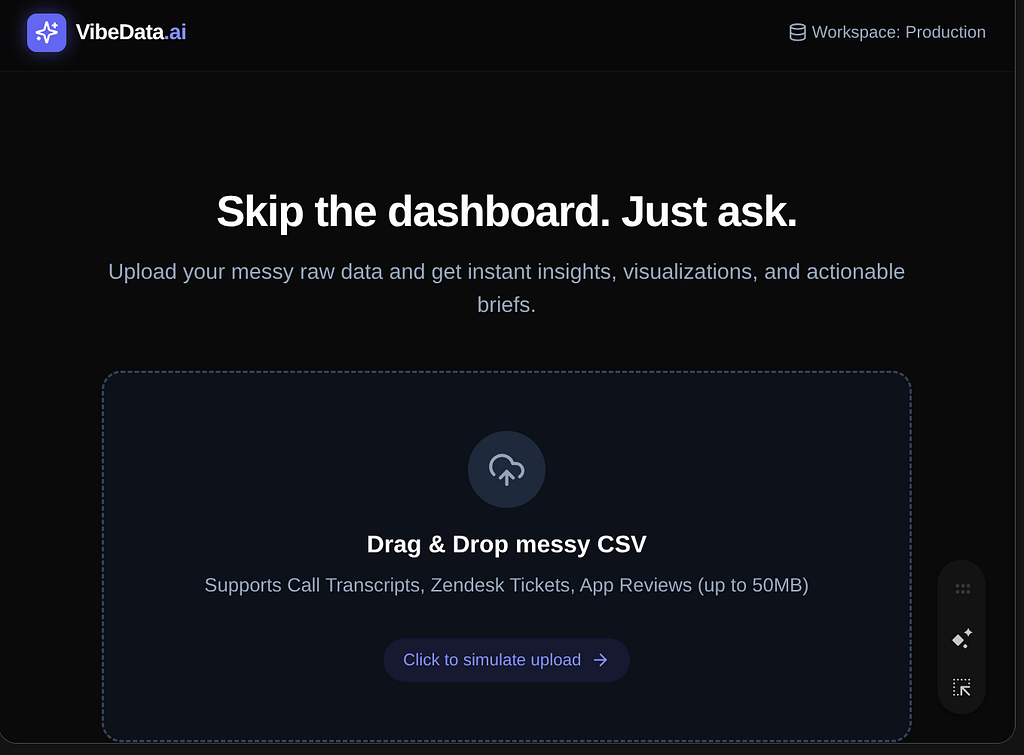
- Example B: The Insights Dashboard. A data-rich window with live metrics, workflow buttons, and integrated AI features.
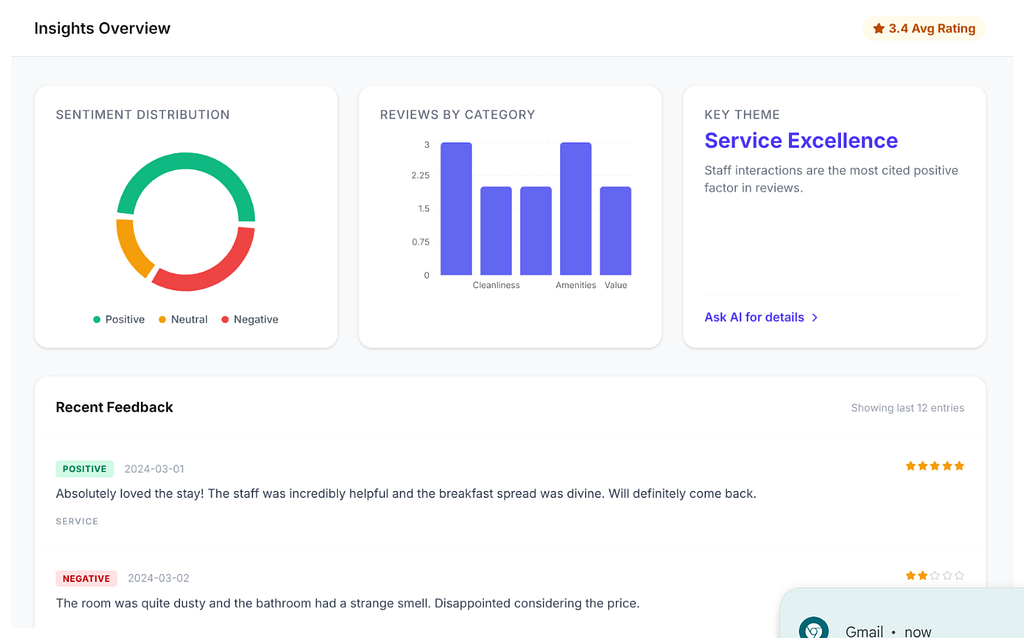
For complex business workflows, the Insights Dashboard is vastly superior. This is the essence of a micro-application.
Deep Dive: The “Voice of the Customer” Insight Engine
Normally, discovering why customers are churning requires a data science team to build a dashboard or manually sift through reviews. While you could try to uncover this through a back-and-forth chat conversation, that requires multiple turns and becomes highly inefficient if the analysis needs to be done recurrently or by different people. A micro-app turns that whole process into a single, repeatable interaction.
A manager simply uploads the data and asks: “What are the top 3 reasons customers are churning this quarter, and what feature should our engineering team build next to fix it?” Instantly, the app categorizes the unstructured data, outputs a visual breakdown of negative sentiment drivers, and drafts a product brief.

When you build these micro-applications, you can use specific techniques to make them durable and reusable:
- Dynamic Data: Allow the app to accept any new file, rather than hard coding a single dataset.
- Adjustable Logic: Add UI elements (sliders, toggles) so non-technical users can tweak the AI’s configuration or run simulations.
- Built-in Actions: Include “one-click” buttons to format the output or send it directly to another enterprise system.
- Historical Tracking: Enable the app to save snapshots of its analysis to compare trends month-over-month.
The Reality Check: Avoiding “Shadow AI”
I can hear the Technology Leaders getting nervous. If every department is “vibe coding” their own micro-apps, aren’t we just creating a world of “Shadow AI”?
This is a critical concern. You cannot have employees building unsanctioned apps with proprietary data on their desktops. To make these advanced capabilities accessible safely, AI Application Platforms are becoming the essential enterprise foundation, with security, guardrails, and compliance baked in by design.
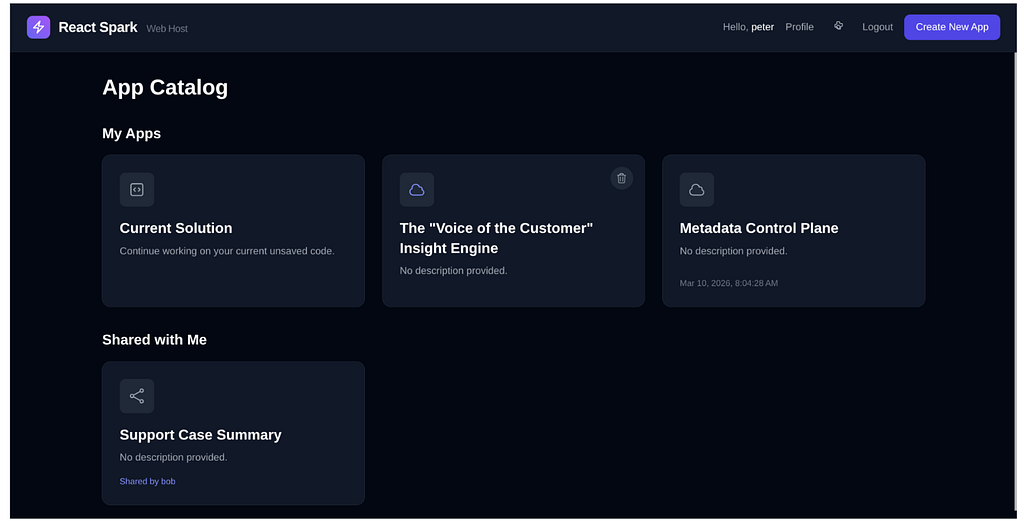
We are moving toward a strict, governed lifecycle for these tools:
- Create: An employee builds a micro-application to showcase an idea or solve a specific team bottleneck.
- Onboard: The app is onboarded onto the organization’s internal AI platform.
- Verify & Share: The application is verified for security, granted access to common enterprise data services, and shared with others for feedback.
- Integrate: The integration is automated and deployed safely into the broader custom AI ecosystem.
Engineering the AI-Boosted Organization
Stop thinking about AI as just a chatbot or a search bar, and start thinking about it as a capability that can build you a new tool the exact moment you need it. It is no longer just about the technology itself; it is about what your people can achieve and how we enable them.
We are no longer just experimenting with isolated AI use cases; we are engineering the AI-Boosted Organization. And the future is now.
From Chatbots to AI Coding: Engineering the AI-Boosted Organization was originally published in Google Cloud – Community on Medium, where people are continuing the conversation by highlighting and responding to this story.
Source Credit: https://medium.com/google-cloud/from-chatbots-to-ai-coding-engineering-the-ai-boosted-organization-ee2af5816dbf?source=rss—-e52cf94d98af—4
About the Author