AI adoption follows a clear maturity curve
Here’s where your team actually sits — and what comes next.
Most organizations treat AI as a binary switch. Either you’re using it or you’re not. The reality is more nuanced. There’s a progression from completely gated access to fully AI-native operations.
Step one is gated access. Only approved models make it through. IT controls the gateway. Every output stays local. This is where most regulated industries live today.
Step two is assisted use. One engineer, one agent, supervised pair programming. The work gets faster, but you’re still watching every keystroke. The unlock is real: afternoon tasks shrink to between-meetings bursts.
Step three is parallel orchestration. One engineer manages five to ten agents at once. Claude checks its own work before you see it. The backlog that used to take weeks becomes an afternoon of orchestration.
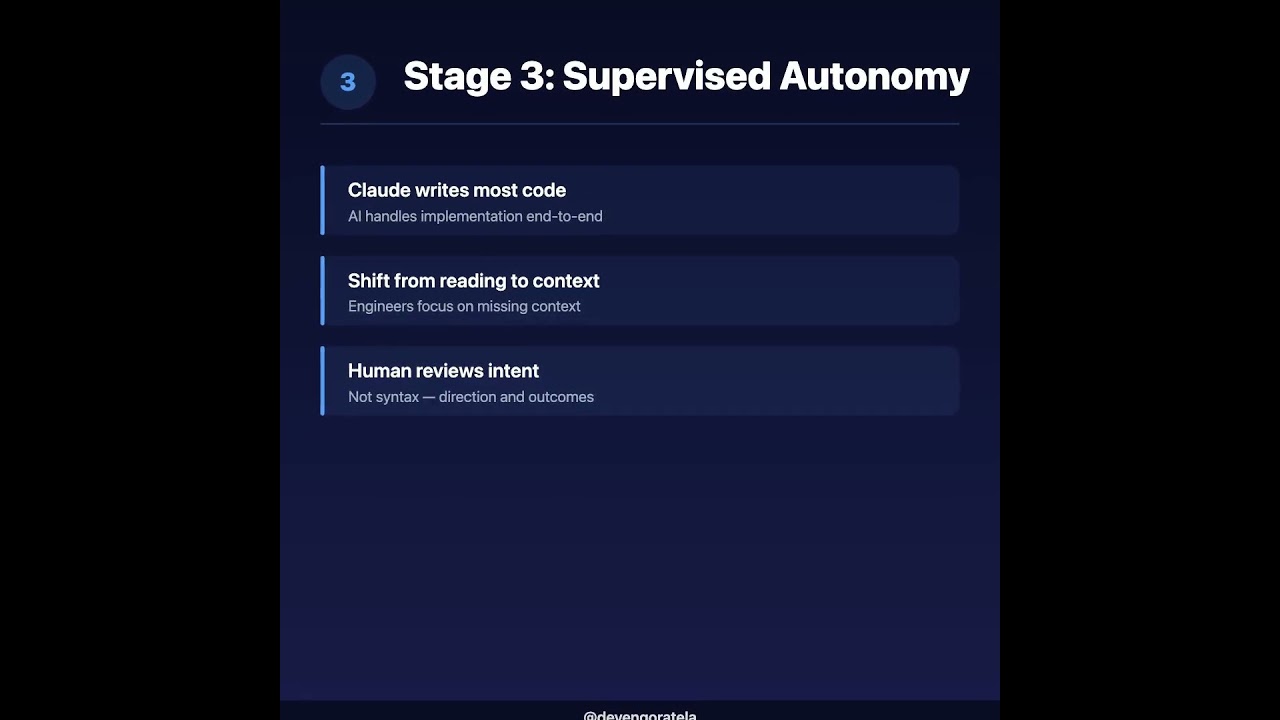
Step four is supervised autonomy. Claude writes most of the code. You shift from “did you read the code?” to “what context was the model missing?” Maintenance runs continuously in the background.
Step five is AI-native. You steer by intent and monitor by exception. Hundreds of agents run. The quarter-long migration becomes a workflow you kick off and check on.
The jump from step zero to step one requires executive alignment and a secure deployment path. The jump from step three to step four requires trust in the loop and self-verification you believe in. The jump to step five requires domain-specific automation and cost controls.
Where does your team sit on this curve?
♻️ If you’re thinking about AI maturity at your organization, this framework is worth sharing with your leadership team.
➕ Follow Deven Goratela for practical AI strategies that keep you ahead of the curve.
#AI #Automation #Leadership #Claude #TechStrategy
Video Source
About the Author