Welcome to the July 16–31, 2026 edition of Google Cloud Platform Technology Nuggets. The nuggets are also available on YouTube.
AI and Machine Learning
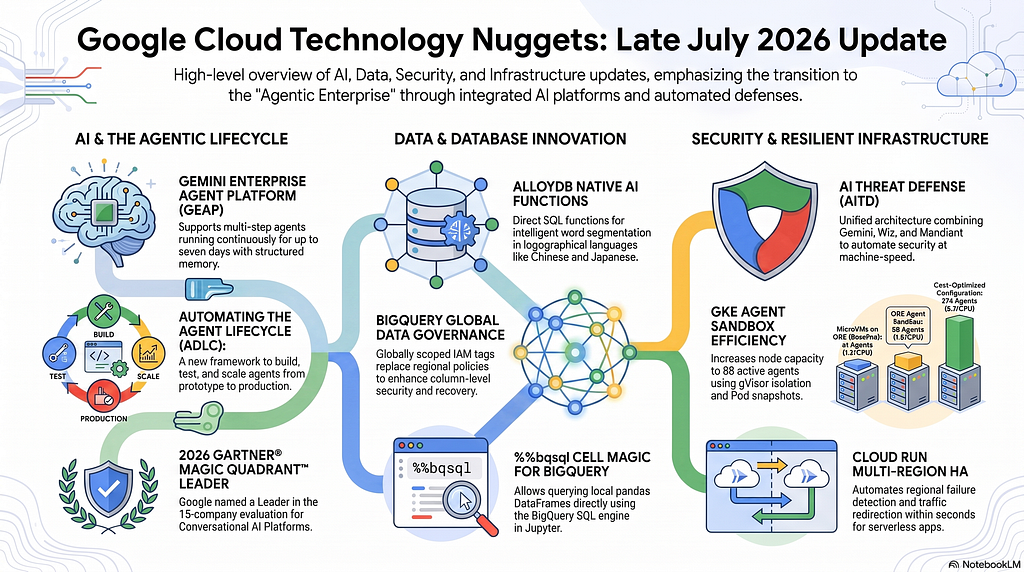
Google Cloud has introduced updates to the Gemini Enterprise Agent Platform, focusing on long-running task execution, security, governance, and observability.
These include:
- For execution and context retention, Agent Runtime supports running multi-step agents continuously for up to seven days.
- Agent Memory Bank uses structured schemas to extract and maintain user context across interactions.
- Security capabilities include CodeMender for automated code vulnerability remediation.
- Agent Identity for IAM permissions bound to the runtime with non-repudiable auditing.
- Agent Gateway for centralized access control and inline protection against prompt injection, tool poisoning, and data leakage using Model Armor.
- Agent Registry acts as a central library to catalog agents and connections
- Integrated Agent Evaluation and Agent Observability tools provide execution tracing, real-time dashboards, and custom or pre-built evaluation metrics to monitor agent performance.
For more details, check out the blog post.
Who does not want to conserve on tokens? Read this article that introduces eleven core principles for token-efficient software engineering. These principles range from selecting a model to using Skills, automating and more. Check it out.
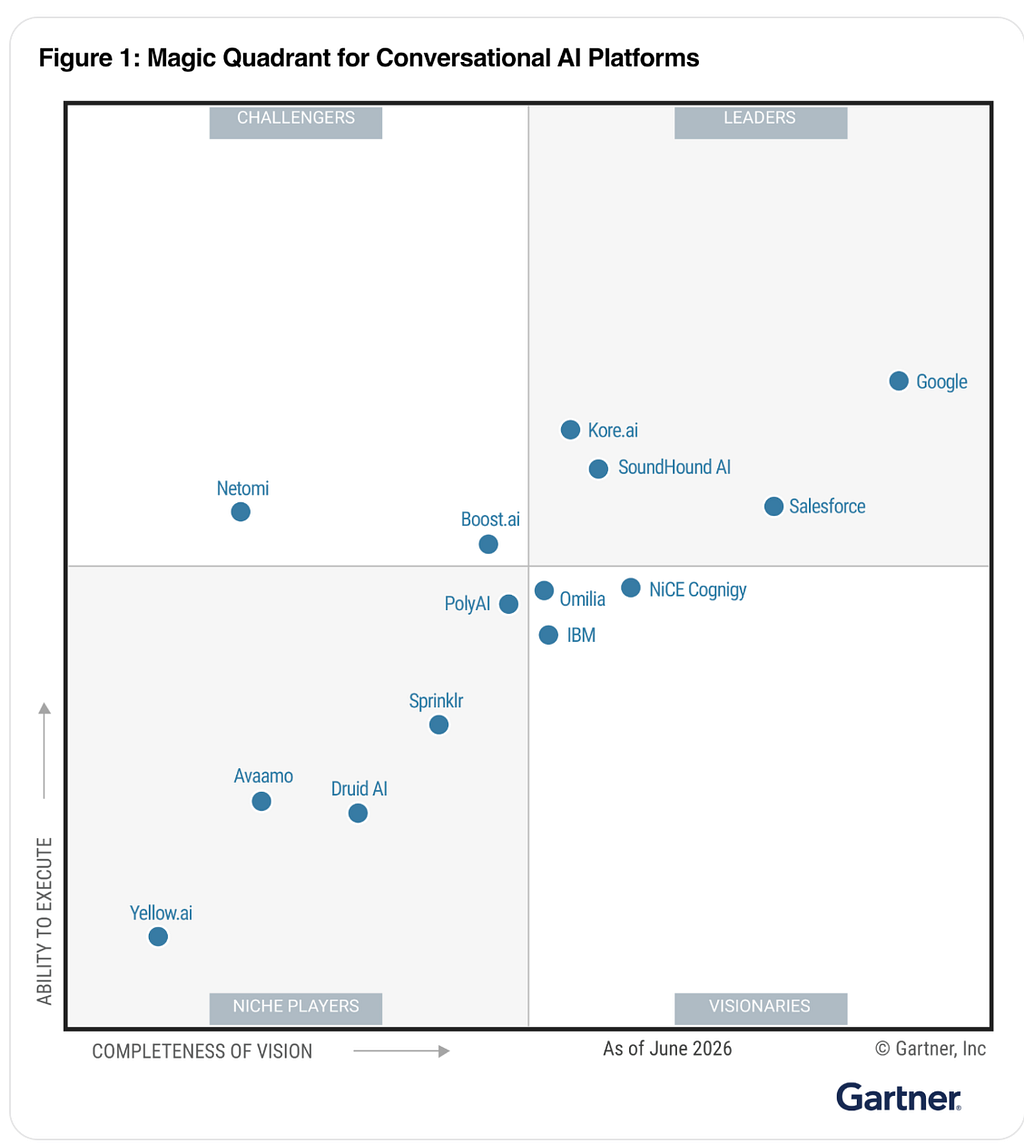
Google has been named a Leader in the Gartner® Magic Quadrant™ for Conversational AI Platforms. Check out the blog post and Download the complimentary 2026 Gartner Magic Quadrant for Conversational AI Platforms.
Data Analytics
BigQuery brings in a preview of IAM data governance tags in to enhance column-level security. Built on Google Cloud’s Resource Manager infrastructure by setting the “–purpose=DATA_GOVERNANCE” field when creating tag keys, this feature replaces older regional policy tags with a globally scoped approach defined at the organization level. It supports managed disaster recovery by automatically replicating tags and data policies across regions, hierarchy building up to five levels deep, and decoupled governance that allows tagging data prior to enforcing access controls. Check out the blog post, that provides 3-steps to column-level security.
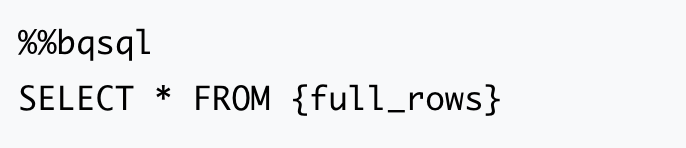
If you are a Data Engineer, you often face a choice of whether to use Python or SQL. Both have their place. But what if you could use both of them in your Jupyter Notebook workflow? Google Cloud has introduced the %%bqsql IPython cell magic through the bigframes extension in the BigQuery DataFrames library. This tool allows developers to query local pandas DataFrames directly using the BigQuery SQL engine by converting them to temporary tables, and it saves SQL query results back into BigFrames DataFrames that live on the BigQuery engine. One can now build hybrid pipelines that transition between Python preprocessing, SQL transformations, and standard Python plotting libraries or advanced capabilities like bigframes.bigquery.ai.forecast.For more details, check out the blog post.
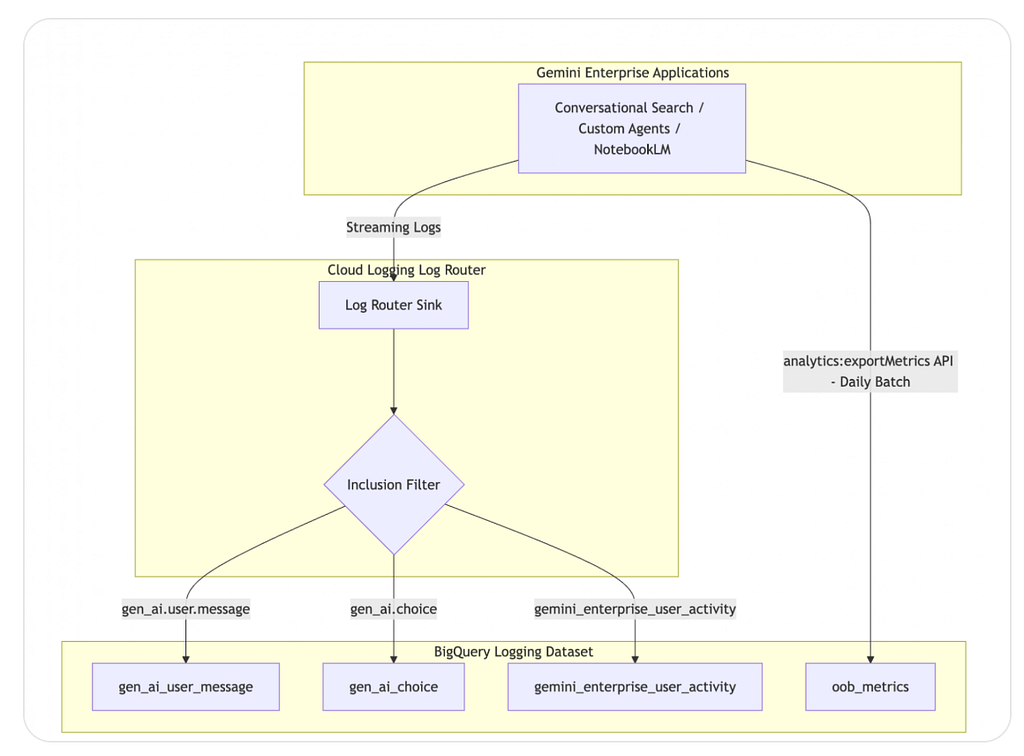
To govern Gemini Enterprise app usage at scale, Google Cloud enables you to continuously route conversational telemetry and administrative audit logs directly into BigQuery. By establishing continuous Cloud Logging Log Router Sinks for prompt inputs (gen_ai_user_message), model choices and reasoning (gen_ai_choice), and principal identities (gemini_enterprise_user_activity), as well as enabling Data Access logs for the Discovery Engine API, organizations can capture user activity alongside administrative control plane events. Check out the post.
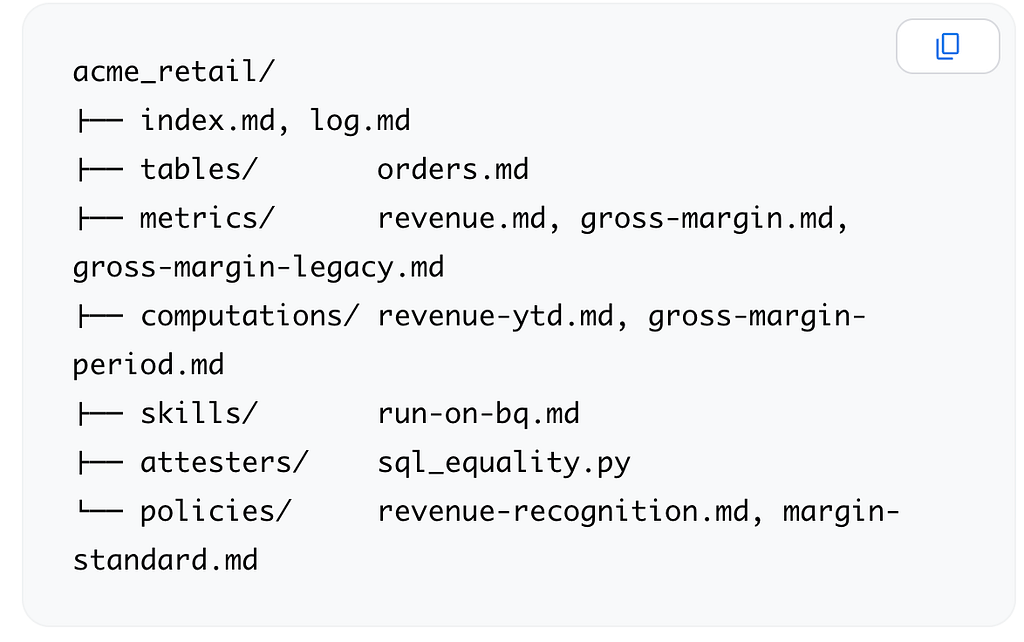
Open Knowledge Format (OKF) is now in v0.2 and addresses accountability when agents generate content for a knowledge corpus. The update adds optional, backward-compatible fields to the YAML frontmatter of markdown files, allowing consumer applications to evaluate a concept before processing its body. The v0.2 version also adds a new “Attested Computation” concept type, which provides a mechanical way to verify if a value was computed using sanctioned queries by checking execution receipts against declared parameters. For more details, check out the blog post.
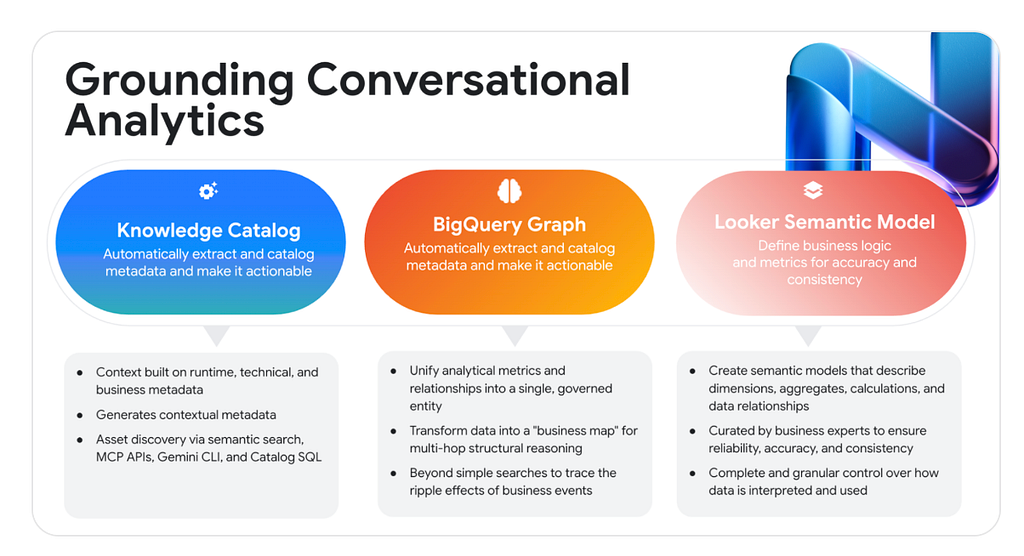
Conversational Analytics capabilities across Google Cloud has expanded. Conversational Analytics is now generally available for BigQuery and Looker, while support for AlloyDB, Cloud SQL, and Spanner is available in preview, alongside federated access to multi-cloud datasets including Lakehouse Managed Service tables, Apache Iceberg REST catalogs, and AWS S3 Unity Catalogs. For more details, check out the blog post.
SAP Business Data Cloud (BDC) Connect for BigQuery is now in general availability. This solution establishes a secure, bi-directional, zero-copy connection that lets you query SAP tables, metadata, and business semantics directly within BigQuery and Knowledge Catalog without paying data-sharing fees. Check out the post.
Databases
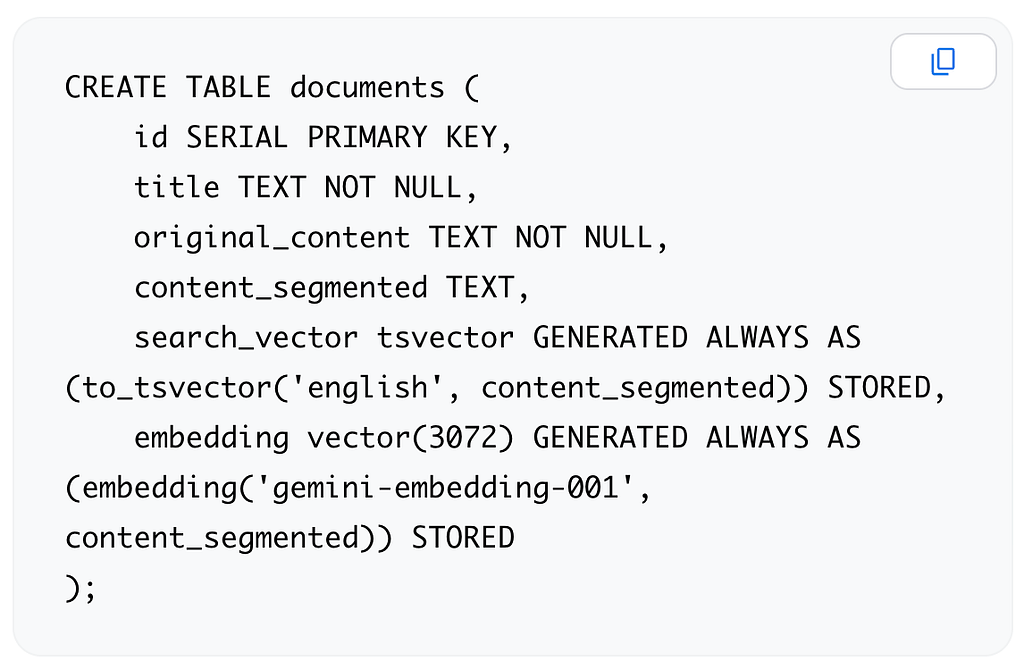
Google Cloud has introduced native in-database AI Functions using Gemini in AlloyDB to solve PostgreSQL full-text search limitations for logographical languages like Chinese, Japanese, and Korean. Standard PostgreSQL text search parsers rely on whitespace tokenization, causing continuous logographical text to be parsed as single, unbroken lexemes that fail during keyword queries. AlloyDB AI addresses this by allowing developers to invoke Gemini directly from SQL queries using functions like ai.generate() to perform intelligent word segmentation and stop-word removal without exporting data to external processing pipelines. Check out the blog post for more details.
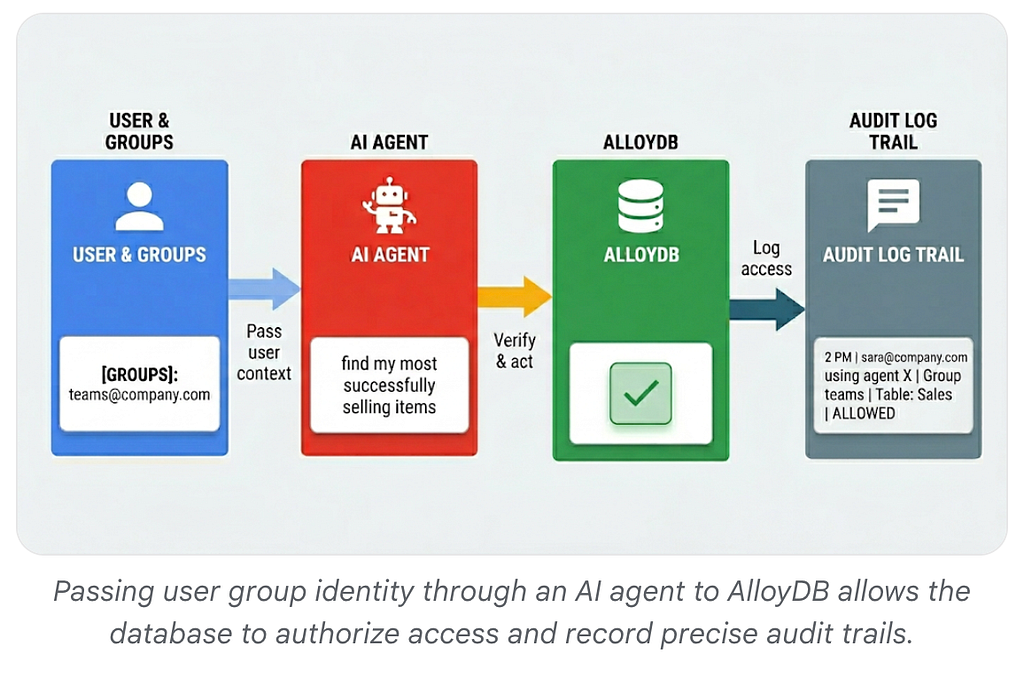
Identity and Access Management (IAM) group authentication for AlloyDB in now in preview. This feature replaces individual database user credentials with group-based access control, allowing security teams to manage up to 200 functional Google Groups (such as team or agent email accounts) rather than managing access per user or instance. Integrated with Cloud Identity and Workforce Identity Federation, this capability unifies security policies across AlloyDB and Cloud SQL when combined with tools like VPC Service Controls, Organization Policies, IAM conditions, and Private Service Connect. For more details, check out the blog post.
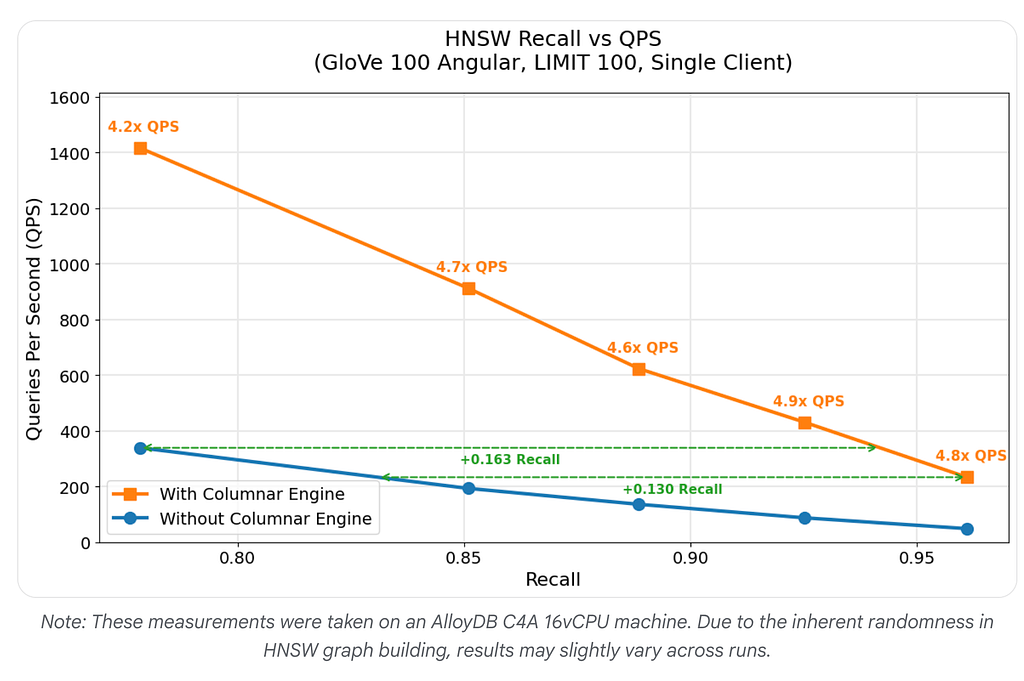
Enterprise AI and retrieval-augmented generation workloads heavily depend on scaling vector search performance. AlloyDB has introduced columnar engine accelerated HNSW, offering up to 4x higher queries per second and increased recall precision compared to standard PostgreSQL pgvector. Check out the blog post.
Developers & Practitioners
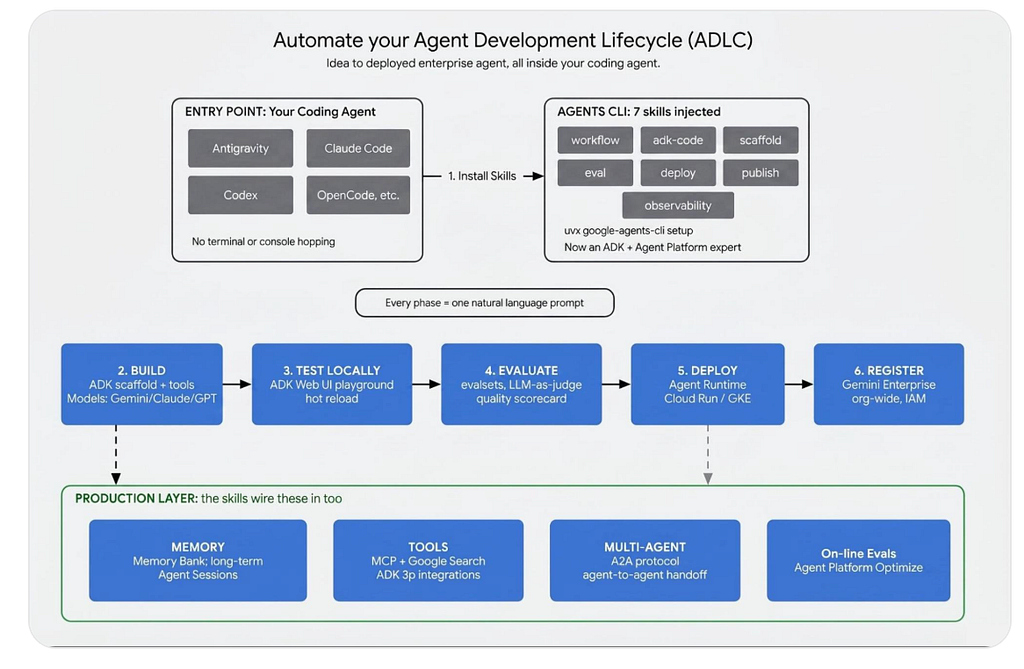
Gemini Enterprise Agent Platform is a list of services across key areas of the entire Agent lifecycle from Build, Govern, Scale and Optimize. How do you actually make use of all the services and move your agents beyond the prototyping stage? In this deep dive, the authors do a great job of using multiple Agent Skills that you can combine with your AI Agent to work through developing, testing, deploying, scaling and getting your Agent ready for production.
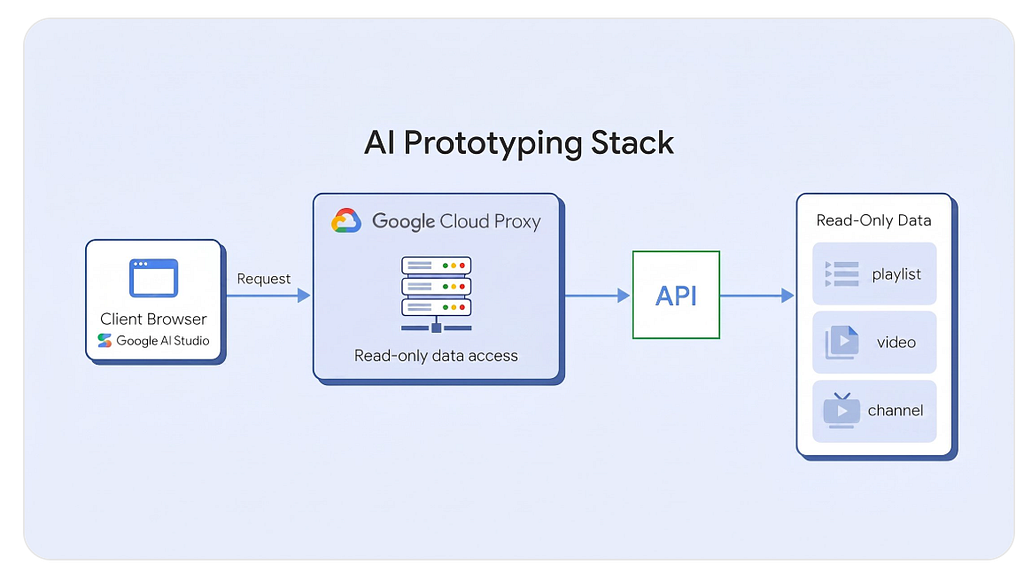
If you are looking to understand why AI prototypes struggle to reach production in enterprise environments, Google Cloud highlights how YouTube solved this challenge by building a specialized AI prototyping stack that separates rapid experimentation from core production infrastructure. Enterprise AI applications often fail due to strict validation loops, corporate network constraints, and the risk of technical debt from unconstrained agentic orchestration. To overcome this speed-versus-risk paradox, YouTube introduced a design-to-code platform that decouples the data layer using Google AI Studio templates connected to a proxy server on Google Cloud for authenticated, read-only access to live metadata, preventing data pollution or server outages. Check out the post for more details.
Looking to secure artificial intelligence workloads on Google Kubernetes Engine (GKE)? Check out the security blueprint that has been introduced that covers infrastructure, model, and application layers across three implementation phases:
- At the infrastructure layer, Confidential GKE Nodes provide memory encryption for GPUs and TPUs, Workload Identity Federation eliminates long-lived access keys when retrieving model weights from Cloud Storage, and VPC Service Controls guard against data exfiltration.
- At the model layer, k8s-aibom creates inventories of models, datasets, and frameworks to maintain supply chain visibility.
- At the application layer, Model Armor inspects prompts and responses for prompt injection and sensitive data exposure, GKE Inference Gateway manages user rate limits and session quotas, and GKE Sandbox uses gVisor to isolate execution of generated code and agent interactions.
For more details, check out the blog post.
Security and Identity
Looking to secure publicly exposed serverless applications like Cloud Run and Cloud Functions against external threats, a Mandiant assessment highlights key technical risks and hardening strategies. The report covers multiple areas like Vulnerabilities and Attack Vectors, Credential Theft, Secure Development, Networking Controls, Monitoring and more.
The first Cloud CISO Perspectives for July 2026 covers the Google AI Threat Defense platform, which combines the reasoning of Gemini, cloud visibility from Wiz, remediation capabilities from CodeMender, and threat intelligence from Mandiant into a unified architecture. The second Cloud CISO Perspectives for July 2026 is out too. The key topic is guidance on AI Threat Defense (AITD), an approach that transitions security from manual firefighting to an automated, continuous capability designed to handle machine-speed threats.
Infrastructure and Networking
Engineering teams often face challenges migrating between AI models or updating to newer model checkpoints due to the slow process of verifying output performance and quality. Google Cloud has highlighted an agentic workflow approach to replace manual testing and prompt evaluation. It recommends three key steps:
- Replacing manual human reviews with model-based Autoraters to evaluate output quality at scale
- Building an agentic loop using the Agent Development Kit within the Gemini Enterprise Agent Platform to dynamically analyze data and test prompts
- Leveraging Google Antigravity to automate underlying coding and agent orchestration.
According to Google Cloud’s State of Infrastructure report, 83% of organizations require infrastructure upgrades for production-grade agentic AI, with key challenges including legacy API integration, operational complexity and engineering overhead, and a lack of high-throughput vector databases. The key is an active data ecosystem to address these issues. Spefically, it recommends the Agentic Data Cloud that uses a borderless Lakehouse running on open standards like Apache Spark and Apache Iceberg, enabling engines such as BigQuery and Spanner to access analytical and operational data across environments without manual data relocation. Check out the blog post.
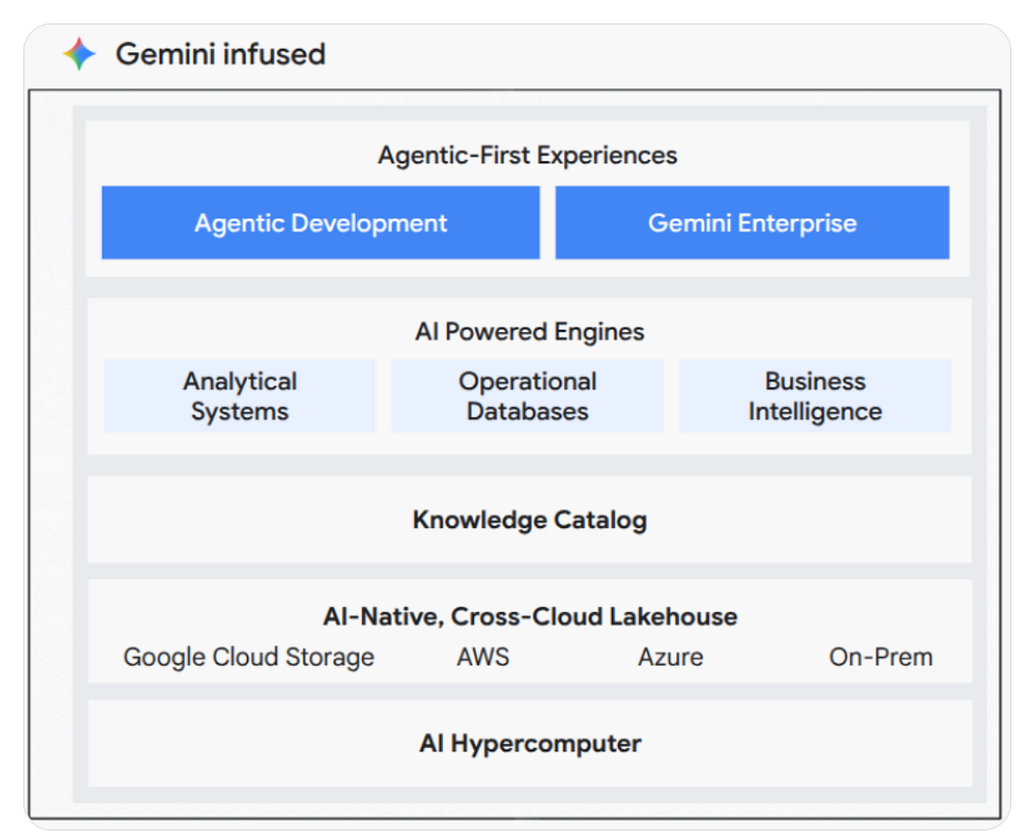
Cloud Run now has high availability capabilities for multi-region services to automate regional failure detection and traffic redirection within seconds. Readiness probes run instance-level health checks on containers to measure regional capacity and determine when instances can receive traffic. Service health aggregates these instance health metrics via serverless network endpoint groups (NEGs) to monitor regional service status. For public internet applications, Cloud Run routes traffic using a global external application load balancer, while private VPC network applications use a cross-regional internal application load balancer to achieve automatic failover. Check out the post.
Containers and Kubernetes
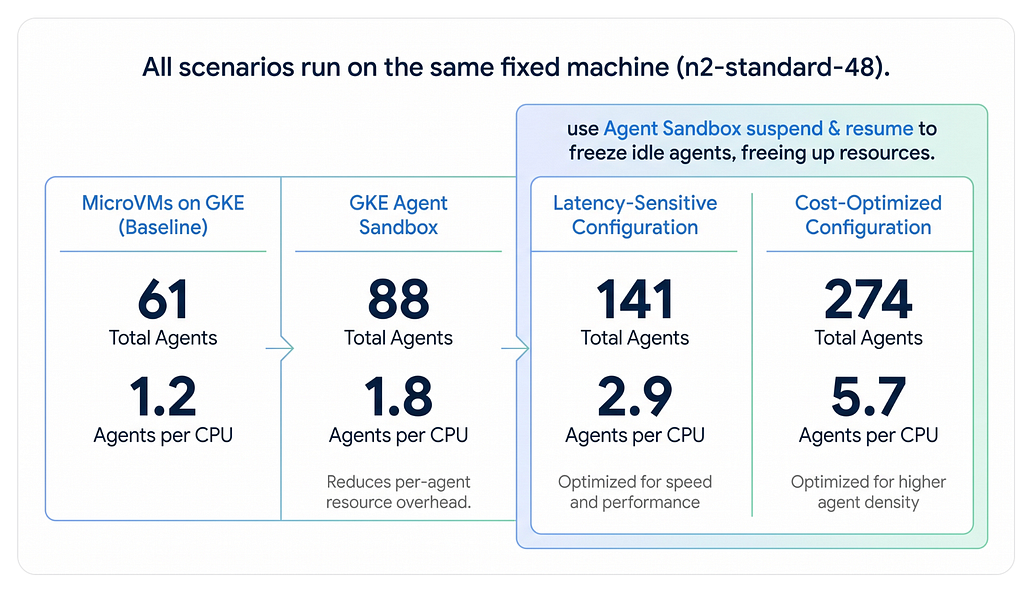
Google Cloud leverages GKE Agent Sandbox alongside workload orchestration techniques to manage bursty, intermittent agent activity. This helps to optimize compute density and reduce operational costs for running AI agents on Google Kubernetes Engine (GKE). Migrating to GKE Agent Sandbox utilizes gVisor’s user-space kernel (the Sentry) to intercept system calls and provide container isolation without full guest OS overhead, raising node capacity to 88 active agents. To handle idle periods, GKE Pod snapshots freeze inactive agents to persistent storage, freeing CPU and memory resources back to the cluster until triggered requests resume them in milliseconds. Check out the post.
Networking
Looking to move your AI agents from pilot to production? Google Cloud has identified leading drivers of project delays. Core to this are networking issues, specifically security, automation challenges, and talent constraints. As agentic AI introduces dynamic, distributed interactions across frameworks, model providers, and APIs, traditional framework-level controls become insufficient, requiring an infrastructure-level platform approach that enforces policy-based controls, observability, and east-west traffic security at the network layer. Check out the recommendations.
Learn about Google Cloud
You’ve heard about Gemini Enterprise Agent Platform (GEAP)? Yes, you can build, scale, govern and optimize your agents. But how do you get started with demos that help you ease into each of the services in those areas. Well, here is a blog post that cover 13 demos that you can learn more about in order to familiarize yourself with the platform. Each of the demos has an associated codelab/repository that you can use. Check it out.
Learn about Google Cloud Identity and Access Management (IAM) conditions, which allow you to scope down predefined administrative roles and service access without creating custom roles. IAM conditions also support attribute-based restrictions based on request criteria, such as limiting execution to specific hours and days using time attributes. Combining these conditional Allow policies with IAM Deny policies provides a defense-in-depth approach to access management across projects, folders, and organizations. For more details, check out the blog post.

Write for Google Cloud Medium publication
If you would like to share your Google Cloud expertise with your fellow practitioners, consider becoming an author for Google Cloud Medium publication. Reach out to me via comments and/or fill out this form and I’ll be happy to add you as a writer.
Stay in Touch
Have questions, comments, or other feedback on this newsletter? Please send Feedback.
If any of your peers are interested in receiving this newsletter, send them the Subscribe link.
Google Cloud Platform Technology Nuggets — July 16–31, 2026 was originally published in Google Cloud – Community on Medium, where people are continuing the conversation by highlighting and responding to this story.
Source Credit: https://medium.com/google-cloud/google-cloud-platform-technology-nuggets-july-16-31-2026-e144cd966789?source=rss—-e52cf94d98af—4
About the Author