This ad sells by teaching.
Not by shouting pain points.
Most lead-gen ads make the same mistake:
They jump from hook to offer too fast. 🧠
This ad works differently.
It slows the reader down and builds logic before asking for the next step.
The structure is simple:
1. Hook
2. Educate about the problem
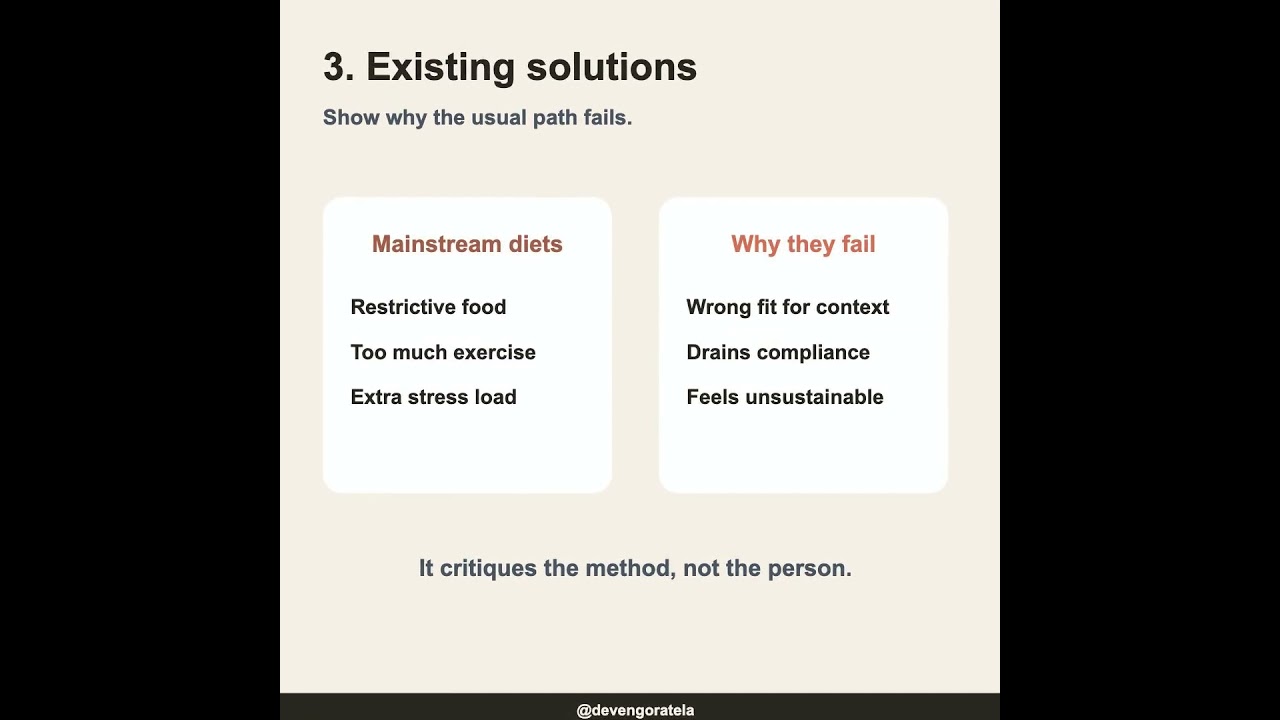
3. Explain why existing solutions fail
4. Introduce a better solution
5. Remove common objections
6. Give a soft call to action
The strongest part is step 2.
Instead of saying, “You are frustrated because you cannot lose weight,” it explains the root problem behind the frustration.
Pain is the outcome.
The problem is the reason behind the pain.
That shift makes the ad feel more educational, more credible, and less pushy. 📌
Then the ad shows why mainstream diets fail for this audience: they can add stress through restrictive protocols and too much exercise.
Only after that does the solution appear.
Now the offer feels logical.
Not random.
Not forced.
The objection handling is also built into the promise:
Sustainable loss.
Without draining energy.
Without damaging the relationship with food.
And the CTA stays soft: learn more, then book a consultation if it feels aligned.
That matters for high-trust offers.
The takeaway:
Longer ads can work when every section earns its place. Educational copy builds trust because it helps the buyer understand the problem before they evaluate the solution. 🔍
What ad have you seen recently that sold by teaching instead of pushing?
♻️ Repost this if your network writes ads, landing pages, or lead-gen funnels.
➕ Follow Deven Goratela for practical AI and automation workflows that help you stay ahead without adding more noise.
#Copywriting #LeadGeneration #MarketingStrategy #AdCreative #DirectResponse
Video Source
About the Author