Disclaimer
This is not a technical tutorial, startup advice, architectural best practice, or academically tested productivity methodology.
This is just a personal journey about solving a very specific pain point in my own life using a chaotic amount of AI tools, gamer logic, sleep deprivation, and questionable decision making.
The Save File Exists. The Reasoning Doesn’t.
A few nights ago, I reopened my old Story of Seasons: Friends of Mineral Town save file after not touching it for a while.
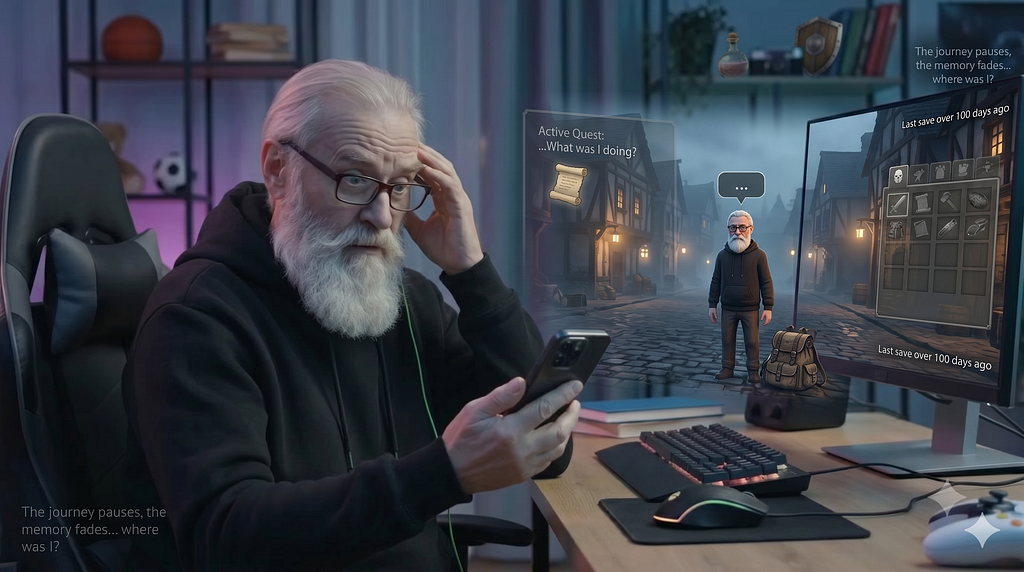
My character was standing right beside the bed at 11 PM in the middle of Spring, and I just stared at the screen for a solid minute trying to reconstruct what kind of logic past-me was operating under.
Was I saving money for a cow first?
Did I already buy chickens?
Which crops did I plant?
Which bachelorette route was I even focusing on?
Did I upgrade my tool?
What was i doing before?
Why there’s so much fish in my backpack?
Then somehow my brain immediately jumped to another memory entirely: my old Pokémon HeartGold save.
You know the type. Starter Pokémon around level 10, random assortment of early-route Pokémon, standing near Violet City, and absolutely zero memory of whether Falkner had already been defeated or not.
The save game is parked right before doing something “important.”
The funny thing is that the games already save almost everything technically important.
Quest journals exist.
Save states exist.
Maps exist.
Inventory exists.
Notion exists.
Excel/Gsheet exists.
Notepad exists (and now with auto save nonetheless!)
But the actual reasoning behind your actions disappears surprisingly fast once life interrupts the rhythm.
Losing The Rhythm
I think rhythm is the important word here.
When I was younger, games occupied permanent RAM space inside my brain. I could stop playing for days and still remember exactly why I was grinding a certain route, which item I was chasing, or why I suddenly decided to change builds halfway through a Dragon Quest IX playthrough in Alltrades Abbey..
These days, work and responsibilities constantly interrupt that flow. You finish playing at midnight thinking “yeah I’ll continue tomorrow,” then tomorrow becomes next week, and suddenly reopening the game feels less like continuing an adventure and more like investigating a crime scene left behind by your past self.
RPGs are especially dependent on momentum.
Not just gameplay momentum, but mental momentum too. You’re not only progressing stats or levels. You’re maintaining an internal narrative:
- why you chose this build
- why you skipped certain equipment
- why you were grinding in a specific area
- what your actual short-term goal was
Lose that rhythm long enough and the save file starts feeling emotionally disconnected from you.
That feeling bothered me more than I expected.
JuaraVibeCoding Accidentally Triggered The Idea
Around the same time, during moderating #JuaraVibeCoding, I was building several completely chaotic AI projects. some of it were related to gaming.
Hell, I was making retro-inspired Space Impact and Battle City style games, plus some ghost/paranormal RPG experiments in Google AI Studio and Antigravity. I was having a blast.

But somewhere in the middle of rapidly prototyping random ideas, I opened one of my own unfinished apps and had the exact same experience again:
Wait… what was I even trying to build here?
That was the moment where the idea clicked for me. I have tons of backlogged games!
Maybe the real problem wasn’t games specifically.
Maybe the actual issue was context loss.
Save systems preserve progress, but they don’t preserve intent.
They remember what happened, but not why you were doing it.
And at least for me, that applies to way more things than gaming.
So I Made A Tiny Gamer Log App
That became the core idea behind the app.
Not a startup-grade app.
Not an AI-powered gaming platform.
Not “revolutionizing productivity for gamers.”
EW.
I just wanted something capable of reconnecting me with my own train of thought.
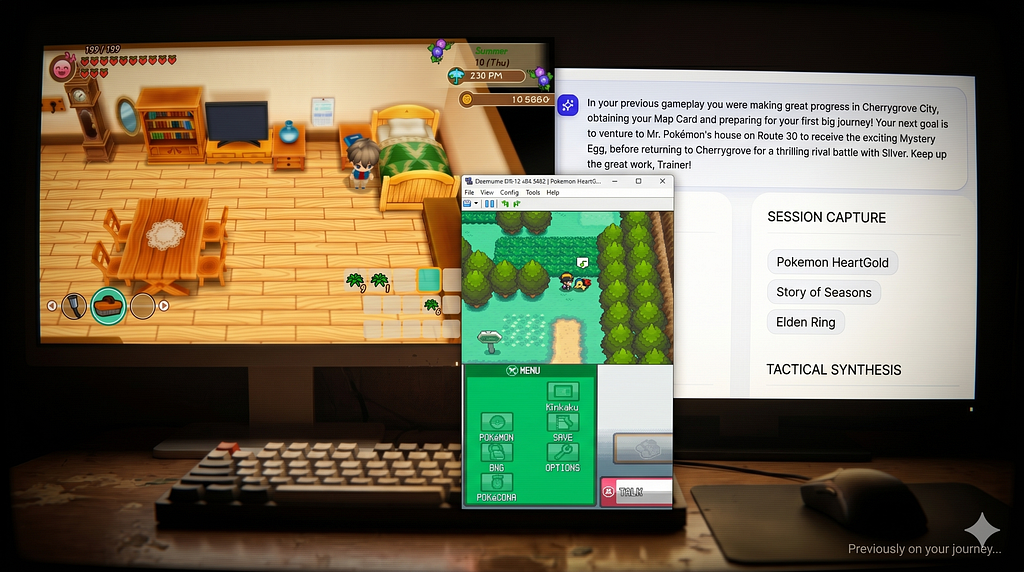
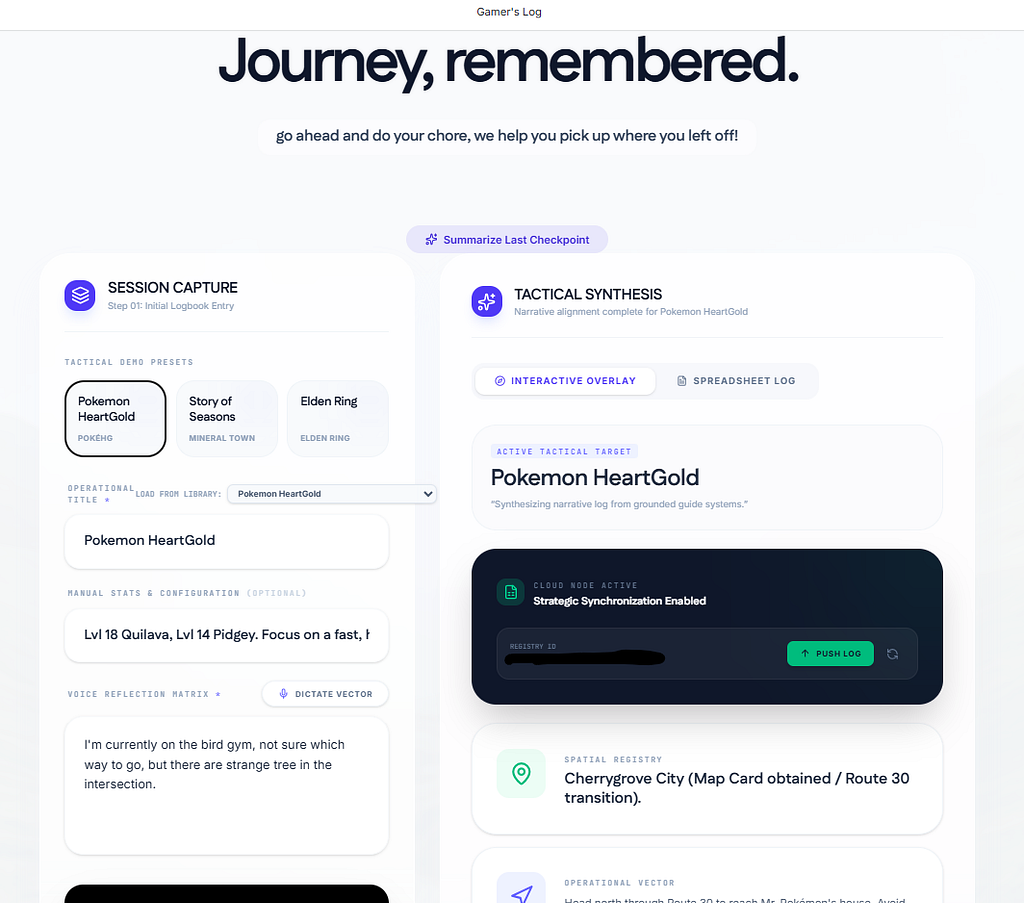
The current version is still extremely small and genuinely kind of messy. The app lets me log my progress, random thoughts, future goals, and little bits of context into Google Sheets (thank you Google I/O update!) that I know future-me will forget later.
Then AI processes those notes together with public guides from GameFAQs and generates a cleaner summary of the journey so far.

So instead of reopening a save file and mentally rebooting from zero, I am greeted with things like:
- “The story so far…”
And weirdly enough, it works.
Not in some magical sci-fi way. The app isn’t replacing memory or playing the game for me. But it helps rebuild momentum, and that tiny detail matters a lot more than I originally expected.
Because sometimes the issue isn’t forgetting information.
The issue is losing continuity with your past self.
The Stack Was Pure Chaos

The funniest part is probably the development stack itself.
Brainstorming: Gemini and ChatGPT (yes I use ChatGPT too, deal with it).
App development: Google AI Studio.
AI studio’s 1-click deployment went through Cloud Run.
Some of the short cinematic clips were generated using Gemini Omni Flash inside the Gemini app until I hit usage limits and migrated temporarily to Google Flow like a digital refugee because I still had 1000 AI credits sitting in my account.
Then everything got stitched together in CapCut while I slowly lost track of time and sleep quality.
My actual human contribution was mostly:
- pressing buttons
- fighting rate limits
- rewriting prompts
- staring into the void after another 429 error

Ironically, generating the app itself was easier than generating coherent short clips for the showcase video.
Making individual 10-second AI scenes is easy.
Making them feel emotionally connected after stitching them together is an entirely different kind of suffering.
The App Does Not Need To Save The World

Somewhere during all this chaos, I realized something important:
This app does not need to become a startup.
It doesn’t need venture capital validation.
It doesn’t need scale.
It doesn’t need monetization.
It doesn’t need to “disrupt” anything.
It only needs to solve one annoying problem that genuinely exists in my own life. That’s enough.
And if that problem exists for other people too, then maybe they can use my app as well. But first things first: it solves a problem inside the smallest, innermost circle — me.
I think AI lowered the barrier for this kind of thing dramatically. Before tools like this existed, a lot of weird personal ideas would simply stay trapped inside the “too much effort” category forever.
Now you can actually externalize tiny frustrations into functional tools surprisingly quickly, even if the result is imperfect.
And maybe imperfect is fine.
At least for me.
The Morning Test
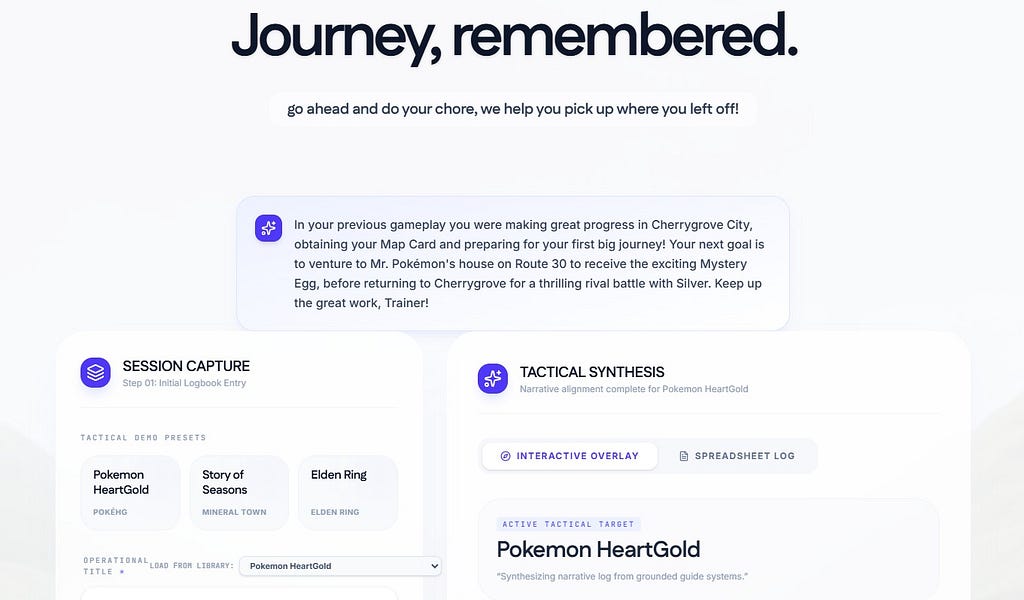
One of my favorite moments with the app happened accidentally.
I logged my game progress late at night before going to sleep, then reopened the app the next morning while still half awake and immediately asked:
“What was I doing again?”
The AI summarized the previous session, explained what I was grinding, reminded me what future-me wanted to do next, and reconstructed enough context that my brain immediately reconnected with the game.
My reaction was basically just:
“Oh right.”
No dramatic startup founder moment.
No life-changing revelation.
No “this changes everything.”
Just a small feeling of relief because the app successfully remembered the part my brain dropped overnight.
And strangely enough, that was already worth building.
So, what did you build during #JuaraVibeCoding?
Writer is a GDE, IT and a gamer that currently trying to remember why there are 37 unfinished save files across multiple platforms.
I Forgot Why I Was Grinding, So I Vibe Coded was originally published in Google Cloud – Community on Medium, where people are continuing the conversation by highlighting and responding to this story.
Source Credit: https://medium.com/google-cloud/i-forgot-why-i-was-grinding-so-i-vibe-coded-8477524cd012?source=rss—-e52cf94d98af—4
About the Author