Welcome to the July 1–15, 2026 edition of Google Cloud Platform Technology Nuggets. The nuggets are also available on YouTube.
Gemini Notebook has also generated an interesting video summary of this blog. If you prefer watching it instead, check the video below:
https://medium.com/media/0803b6f18791655052b35e9819b36233/href
AI and Machine Learning
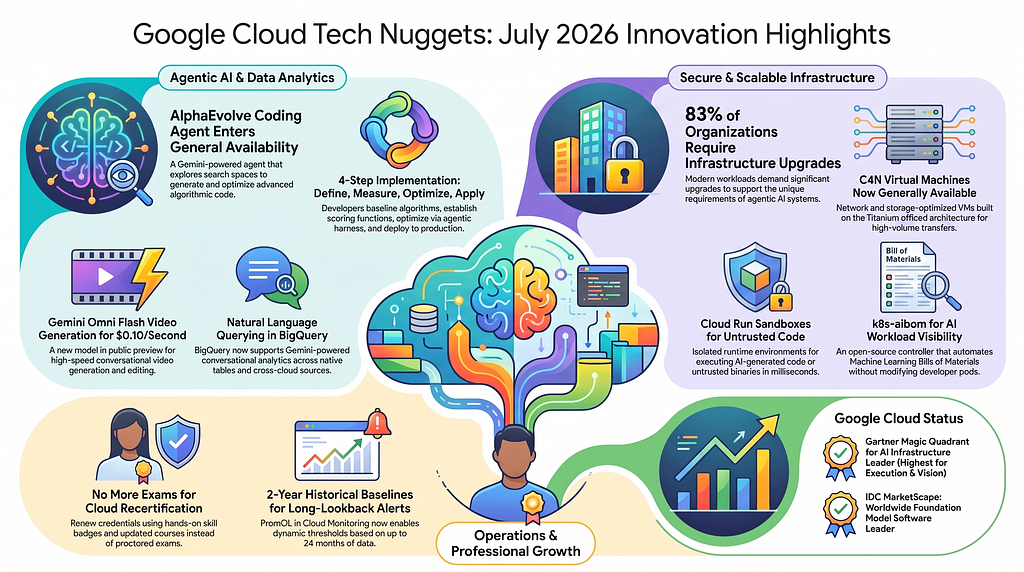
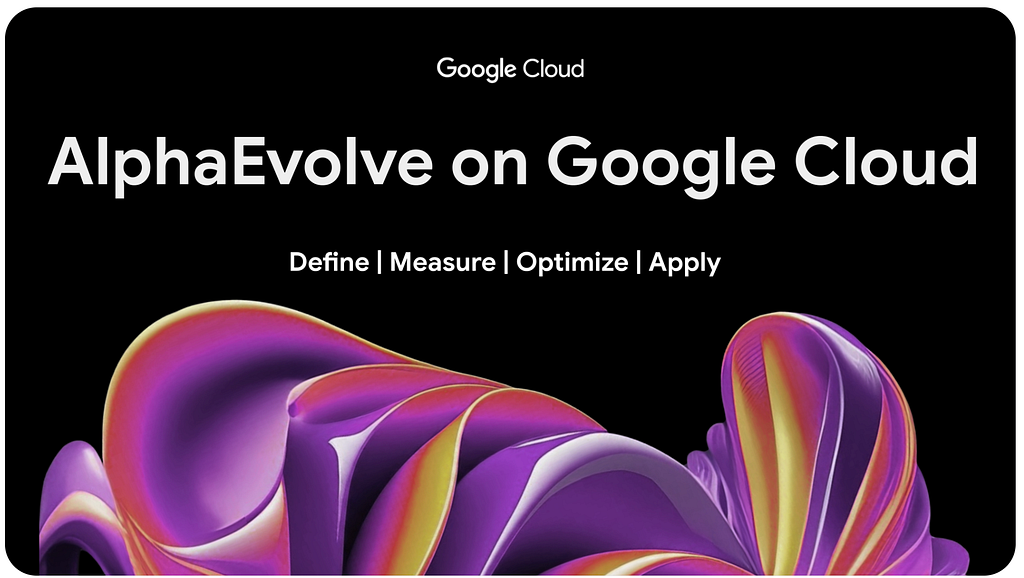
AlphaEvolve, a Gemini-powered coding agent for designing advanced algorithms, is now available in general availability. The system uses an agentic harness to systematically explore large search spaces and generate optimized code based on user-defined metrics. Implementing the tool follows a four-step process:
- Defining a baseline seed algorithm with background knowledge
- Establishing a deterministic scoring function to measure candidate programs on metrics like correctness and performance
- Running the agentic harness to optimize the code against those metrics
- Applying the final algorithm into production infrastructure.
To get started, developers need a seed program designating which code segments to optimize and a client-side evaluation script that compiles, tests, and scores the mutated candidates before submitting the scalar metrics back to the API. For more details, check out the blog post that covers how organizations are using AlphaEvolve.
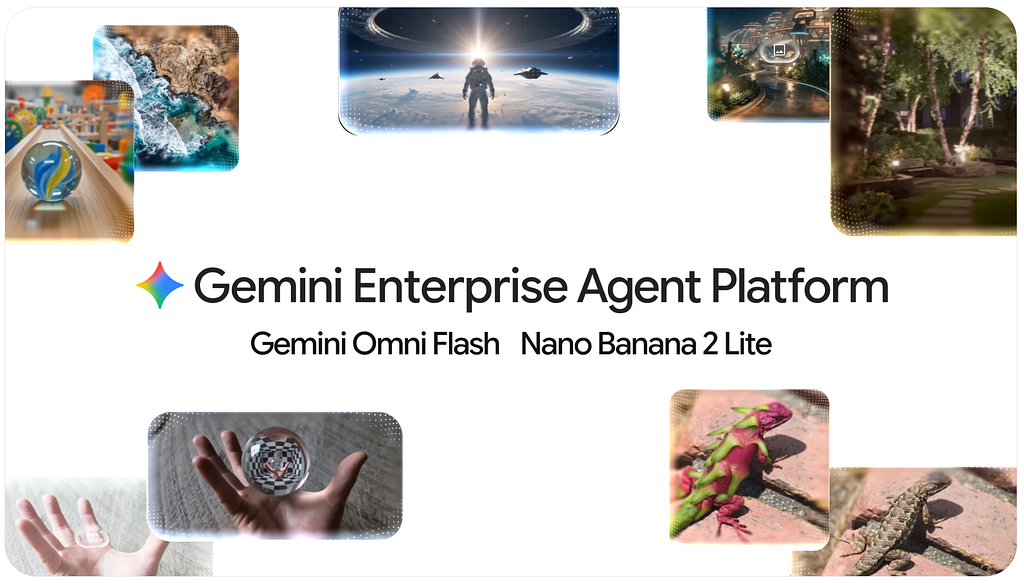
Media creation and Editing on Gemini Enterprise Agent Platform has two new models:
- Nano Banana 2 Lite (Gemini 3.1 Flash-Lite Image) is an image generation and editing model capable of producing visuals in four seconds while improving world knowledge, character consistency, and text localization compared to its predecessor.
- Gemini Omni Flash is a model in public preview designed for conversational video generation and editing at a cost of $0.10 per second of video output.
Both models integrate C2PA content credentials and SynthID watermarking by default, with provisioned throughput available immediately for the image model and rolling out soon for the video model. For more details, check out the blog post.
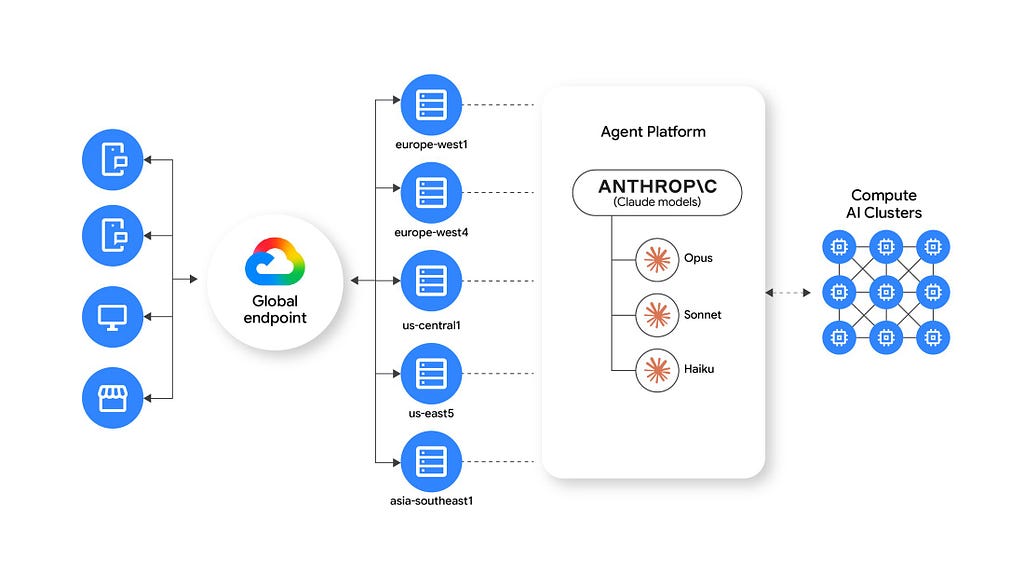
If you are looking to scale frontier AI models in enterprise production, Google Cloud provides a fully managed infrastructure for Anthropic’s Claude models through the Agent Platform’s Model Garden. This integration allows teams to invoke models like Claude using standard REST/JSON endpoints via the AnthropicVertex client, completely inheriting Google Cloud's native Identity and Access Management (IAM), VPC Service Controls, and Cloud Logging and Monitoring features. To handle global workloads, the platform offers three routing endpoint types: global endpoints for geographic load balancing and automatic failover, regional endpoints for strict data residency and low latency, and multi-region endpoints for localized resilience. Check out the blog post.
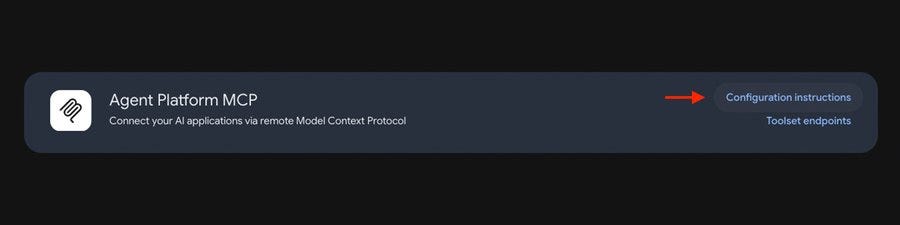
Looking to build and deploy AI Agents on Google Cloud’s Agent Platform. Check out this helpful post that identifies 20 essential questions to ask your engineering teams, along with some practical advice and code examples to get you going. And guess what, there is a fully-managed MCP Server to manage agents on the platform too. Check it out.
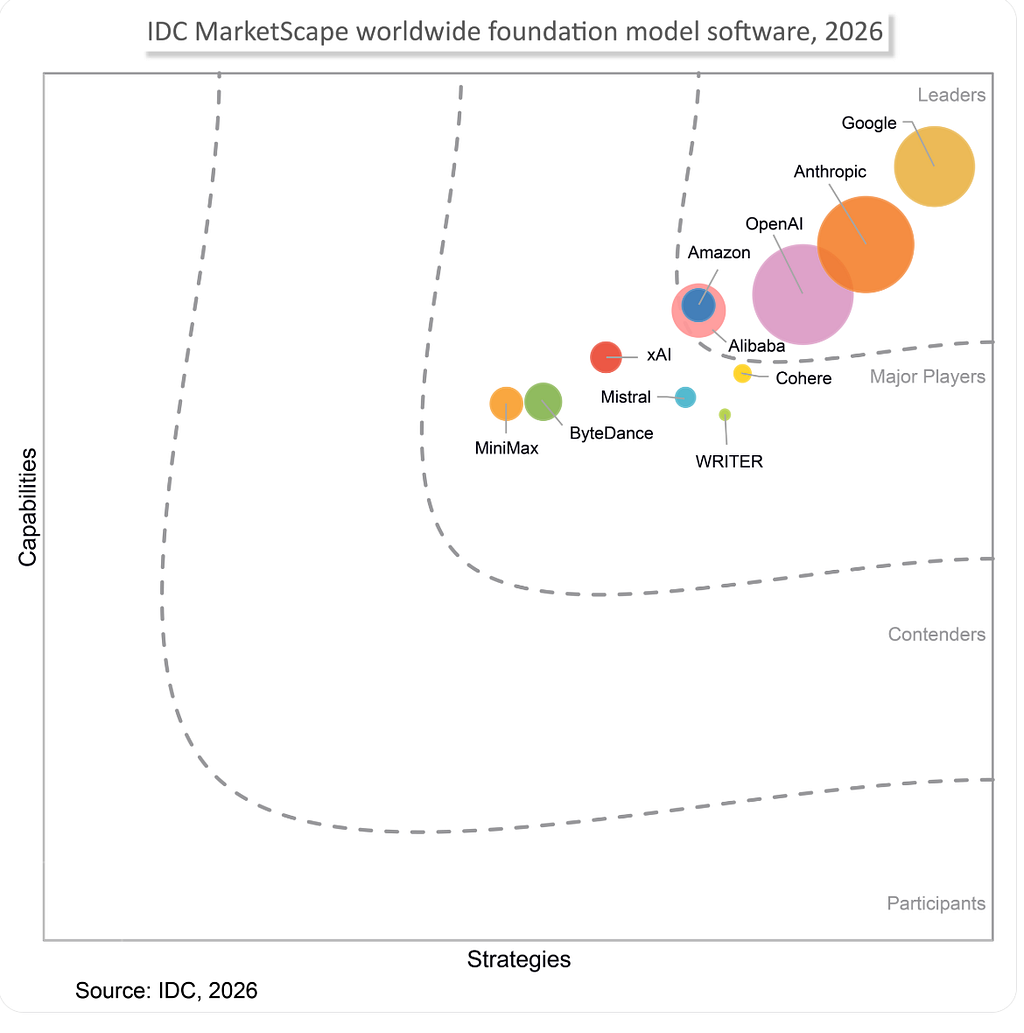
Google has been named a Leader in the IDC MarketScape: Worldwide Foundation Model Software 2026 Vendor Assessment. Check out the blog post to read more and to download your copy of the report.
Data Analytics
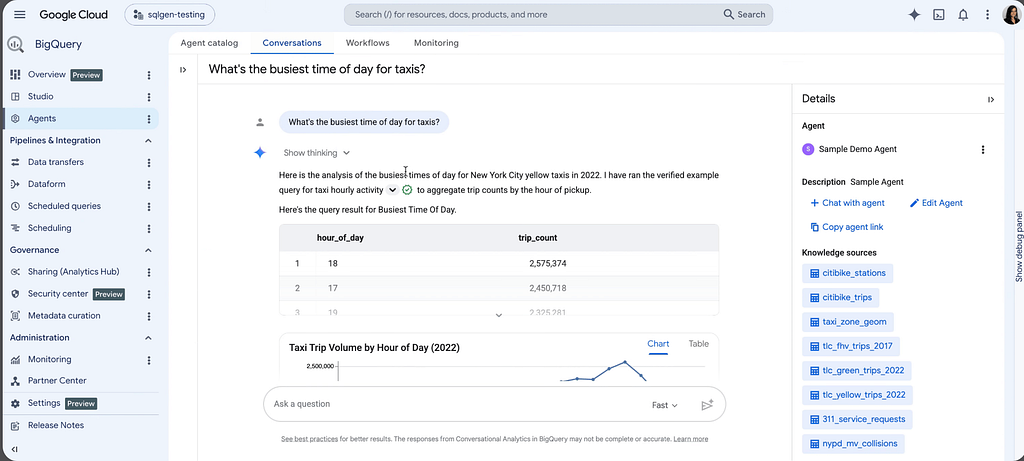
Conversational Analytics in BigQuery now packs a punch with natural language querying, multi-step analysis, and visual reporting capabilities directly to data warehouses. Built on Gemini models, the tool allows data practitioners to author specialized agents grounded in enterprise data sources, including native BigQuery tables, Apache Iceberg tables, and cross-cloud sources like Databricks Unity, AWS Glue, SAP, and Salesforce. You can leverage built-in AI functions like AI.KEY_DRIVERS, AI.FORECAST, and AI.DETECT_ANOMALIES across both relational and unstructured data, as well as deploy autonomous agentic workflows that execute multi-step investigations on a schedule. For more details, check out the blog post.
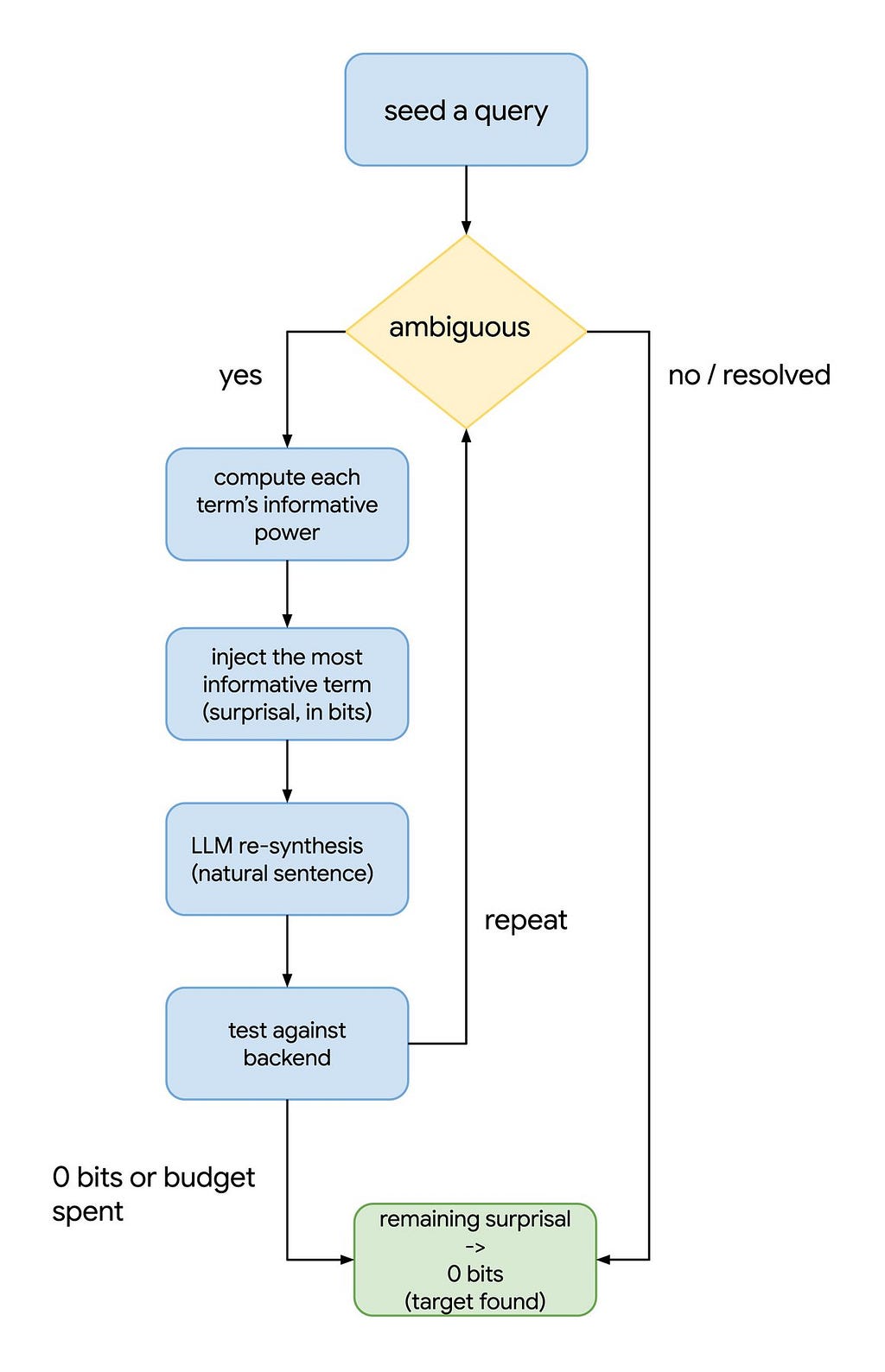
If you are looking to systematically evaluate how effectively AI data agents retrieve datasets based on context, check out this approach called Discovery Bench that treats difficulty as a measured quantity rather than a subjective label. Moving away from traditional pass/fail benchmarks that fail to show where capability falls off, this framework modulates query difficulty by adding or removing steering terms based on their information-theoretic informative power, or surprisal. For more details, check out the blog post.
Databases
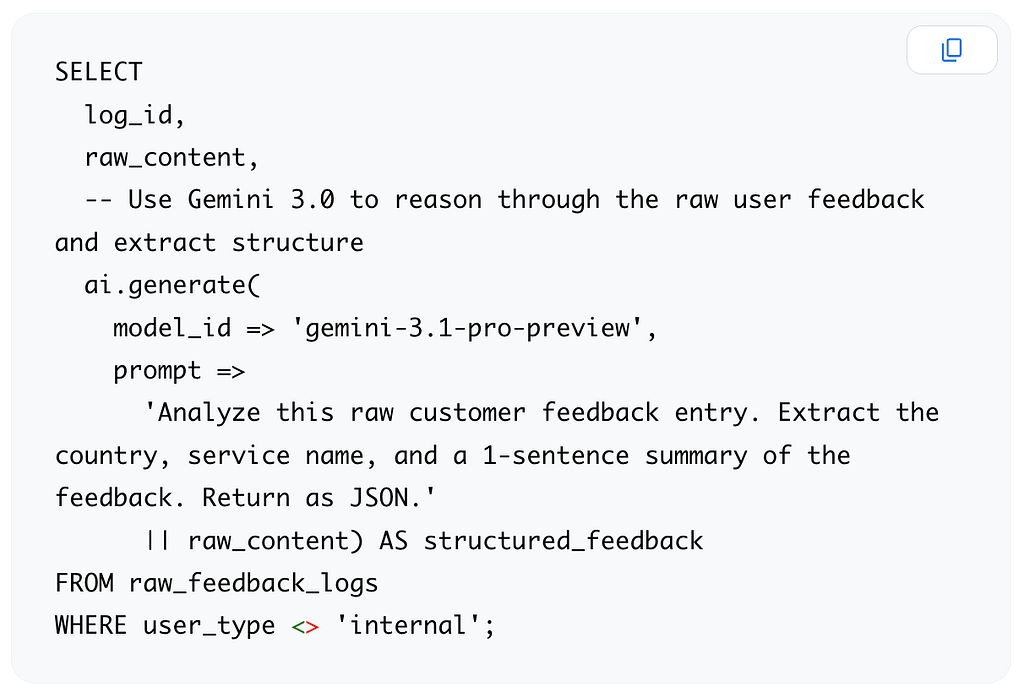
If you are looking to run foundation models directly within your database, there are new updates and capabilities for AlloyDB AI functions. The core AI functions, including text generation, ranking, conditional processing, and forecasting are now generally available, alongside new functions for sentiment analysis and text summarization. To address latency and cost constraints associated with row-by-row model calls, AlloyDB introduces smart batching, which optimizes performance by transmitting boilerplate instructions once per batch and automatically calculating the optimal batch size. For more details, check out the blog post.
Developers & Practitioners
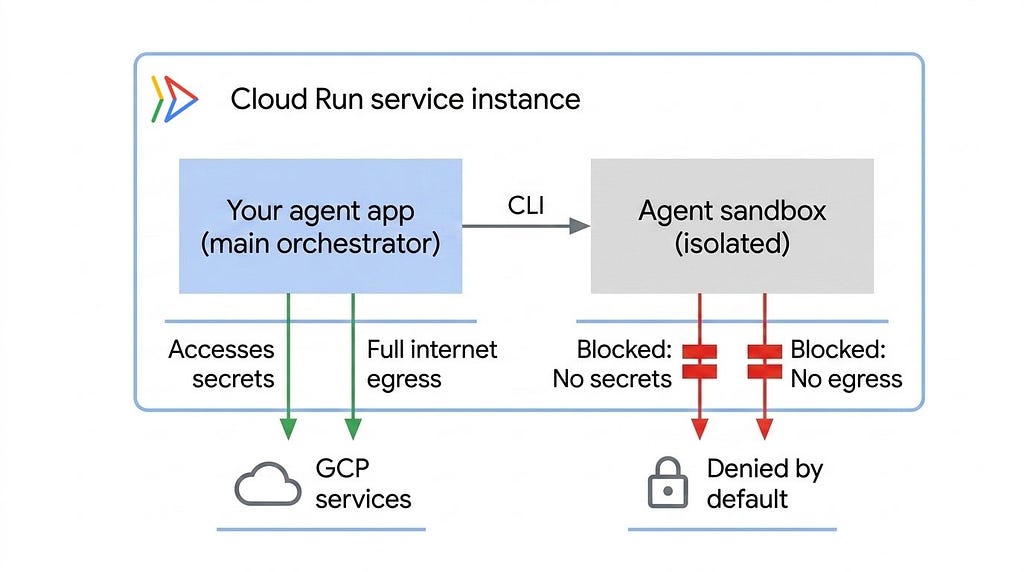
You now have Google Cloud Run sandboxes in public preview, providing a native, isolated runtime environment directly within existing Cloud Run service instances to execute untrusted code or agent workloads in milliseconds. The tool addresses use cases such as LLM code interpreters, headless web browsers, and user-submitted script execution. This feature is especially useful since it helps to safely execute untrusted binaries or AI-generated code without risking the host application, data, or cloud credentials. Check out the blog post for more details.
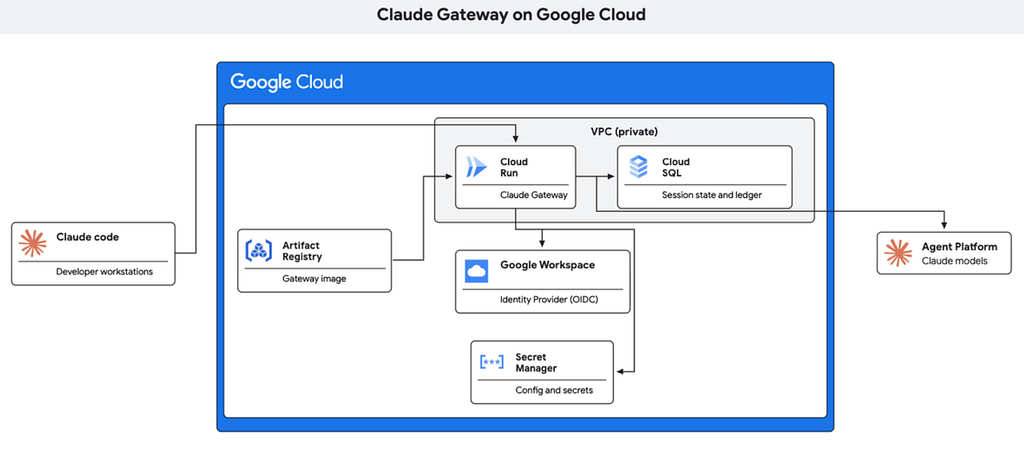
Google Cloud has introduced a self-hosted Claude apps gateway, a service designed to centralize governance, security, and cost controls for organizations deploying Anthropic’s agentic coding tool, Claude Code, on Google Cloud. While individual developers can point Claude Code directly to Vertex AI, large-scale organizational rollout requires centralized management to avoid the friction of managing per-developer cloud credentials. The gateway resolves this by routing identity authentication through an OIDC identity provider like Google Workspace without exposing keys on local machines, server-side tracking of usage telemetry via OTLP/HTTP to collectors like Cloud Monitoring, and enforcing server-side role-based access control and token spend caps. For more details, check out the blog post.
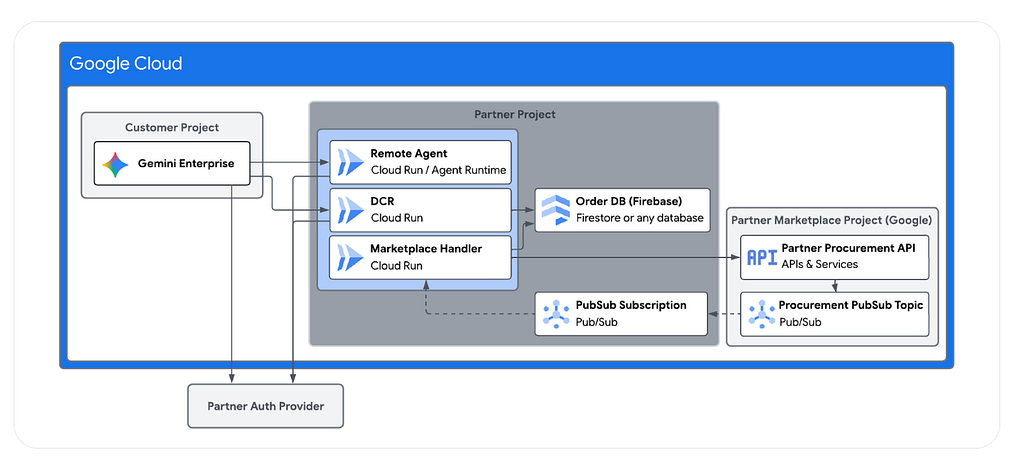
If you are looking to publish and monetize third-party AI agents on the Google Cloud Marketplace and deploy them to the Gemini Enterprise app, here is a developer guide that outlines the complete end-to-end integration lifecycle.
If you are looking to set up GKE Autopilot clusters with managed DRANET for GPUs and TPUs, this article outlines the implementation flow. GKE Autopilot manages nodes, scaling, and security, while managed DRANET handles network resource allocation for Pods, including network interfaces supporting TPUs and Remote Direct Memory Access (RDMA). Check out the blog post for more details.
Security and Identity
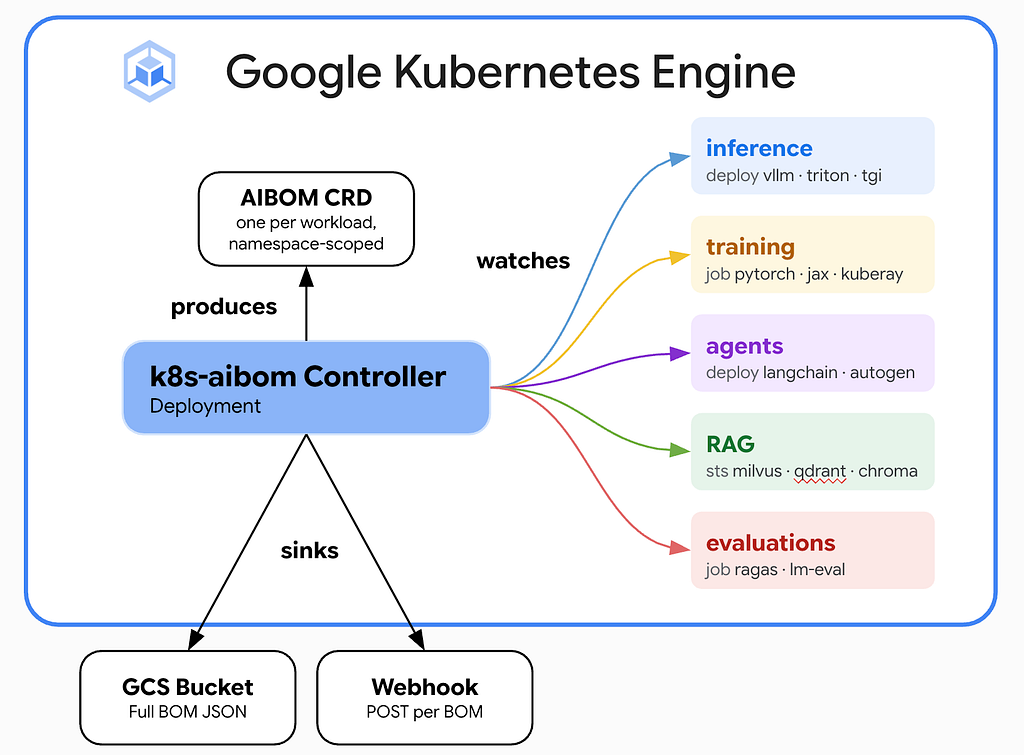
Developers frequently deploy AI workloads, such as model serving runtimes, vector databases, and autonomous agent frameworks without formal registration. Security teams on the other hand need complete visibility into what is running in their clusters, while site reliability engineers (SREs) and platform teams must preserve cluster stability and developer productivity. Enter “k8s-aibom”, an open-source, lightweight, and unprivileged Kubernetes controller designed to automate the generation of machine learning bills of materials (ML-BOMs) without impacting cluster stability or requiring developer pod modifications. Operating directly at runtime, it continuously monitors cluster resources to identify running AI stacks, such as vLLM, Triton, vector databases, and agent frameworks. Check out the blog post for more details.
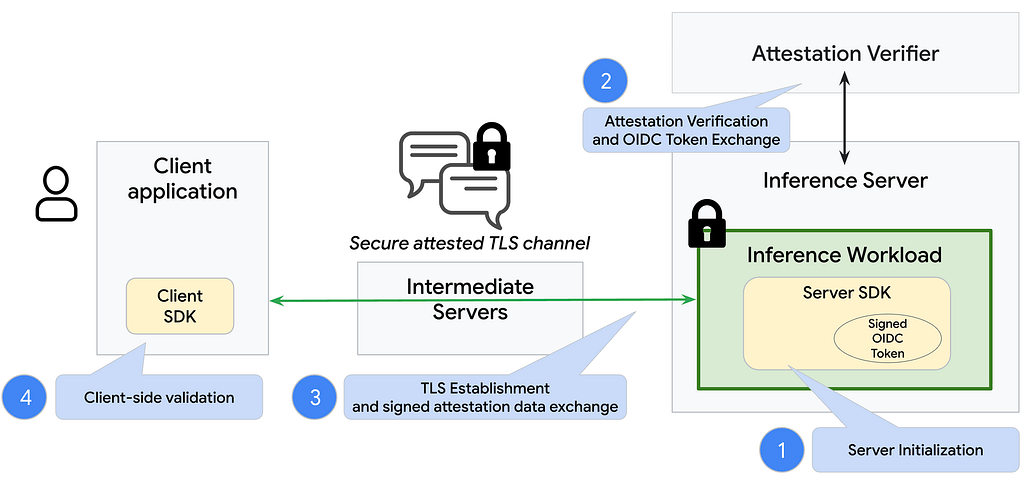
Confidential Computing from Google Cloud has seen additional capabilities being introduced. Key updates include:
- Confidential G4 Machine Series Preview
- Open-Source Prompt Encryption SDKs
- Apple Private Cloud Compute Support
- Intel TDX on C4 Machine Series
- Live Migration General Availability
- Intel Trust Authority Integration
- NVIDIA Hopper GPU Support in Confidential Space
Check out the blog post for more details.
Infrastructure and Networking
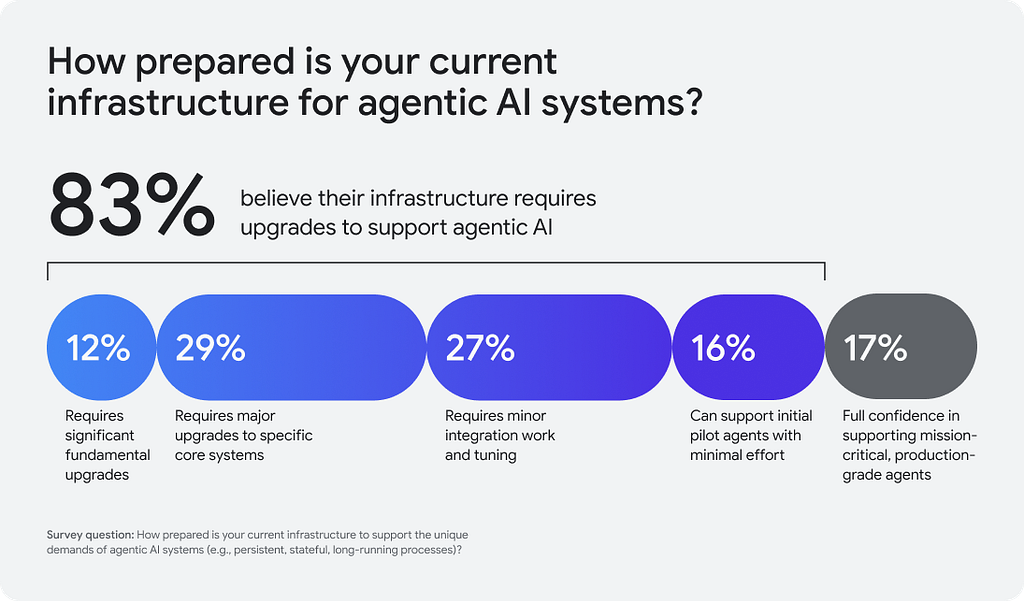
Google Cloud’s State of AI Infrastructure report indicates that 83% of organizations must upgrade their infrastructure to accommodate these workloads. Check out this report that highlights the current issues organizations are facing vis-a-vis inference tax and how you can address the same.
Google Cloud has introduced the general availability of C4N network and storage-optimized virtual machines (VMs), which are designed for x86 workloads requiring high-volume data transfers. Built on the Titanium offload architecture and powered by 5th Gen Intel Xeon Scalable processors, C4N offloads network and storage tasks to dedicated hardware. Check out the blog post for more details.
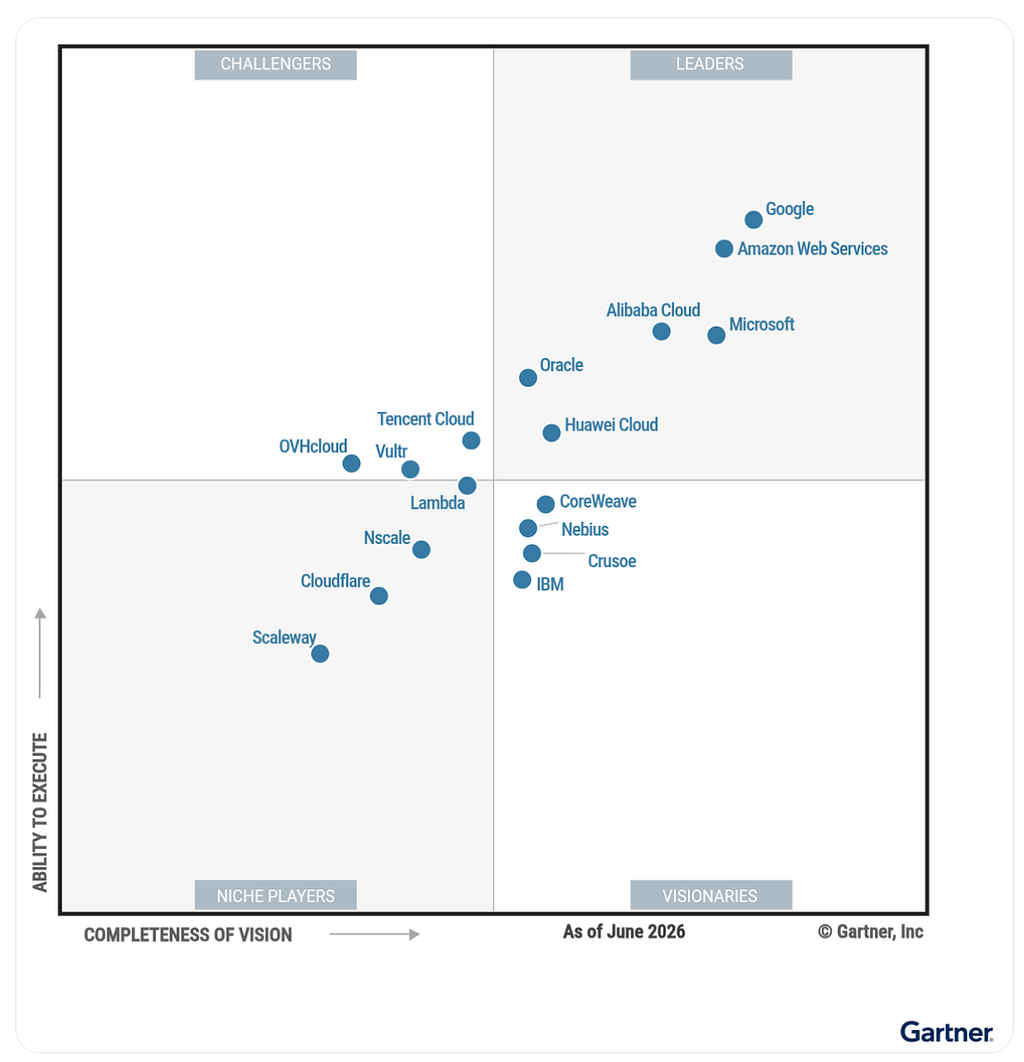
Google has been named a Leader in the inaugural Gartner Magic Quadrant for AI Infrastructure, positioned highest for ‘Ability to Execute’ and furthest for ‘Completeness of Vision’. Check out the blog post to read more and to download your copy of the report.
Operations and Management
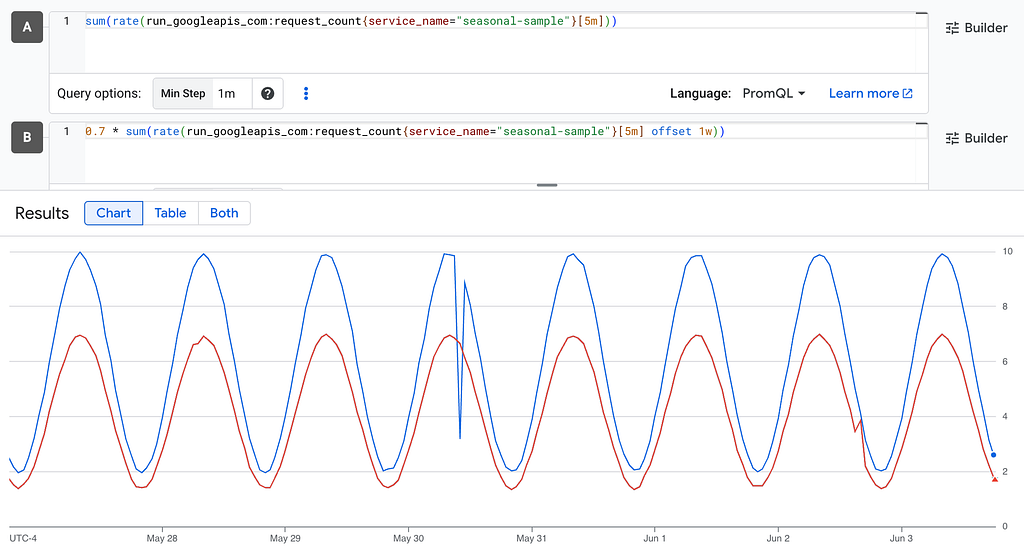
Google Cloud has introduced long-lookback alert policies for PromQL in Cloud Monitoring, currently in preview, to solve the challenge of setting static alert thresholds that lead to frequent false alarms as workloads grow or fail to detect anomalies in metrics that naturally vary by time of day. By enabling evaluation of up to two years of historical metric data, this feature allows developers to implement dynamic thresholding where thresholds automatically adapt based on historical baselines rather than fixed values. Check out the blog post for more details.
Renew your Google Cloud Certificatons
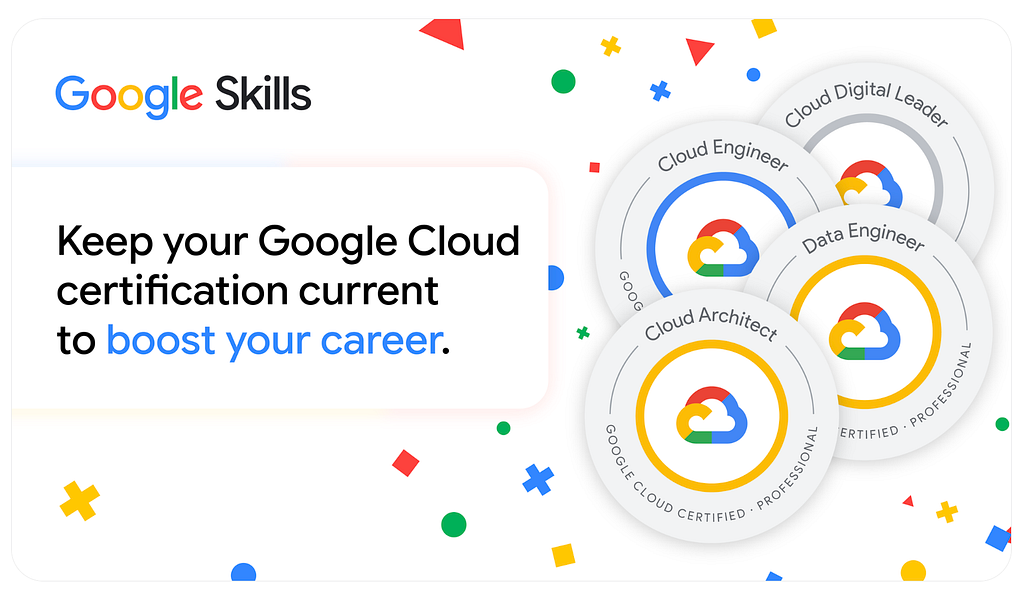
Google Cloud has introduced a new, flexible recertification model through Google Skills that allows individuals to renew their credentials using up-to-date courses and hands-on skill badges instead of traditional multi-hour proctored exams. This streamlined option is currently available for the Cloud Digital Leader, Associate Cloud Engineer, Professional Cloud Architect, and Professional Data Engineer certifications. Practitioners can either take specific courses and labs to learn about updated technologies or fast-track the process by completing interactive skill badges that validate real-world application. Completing these required activities while a certification is active automatically extends its validity by one year. For more details, check out the blog post.
Events
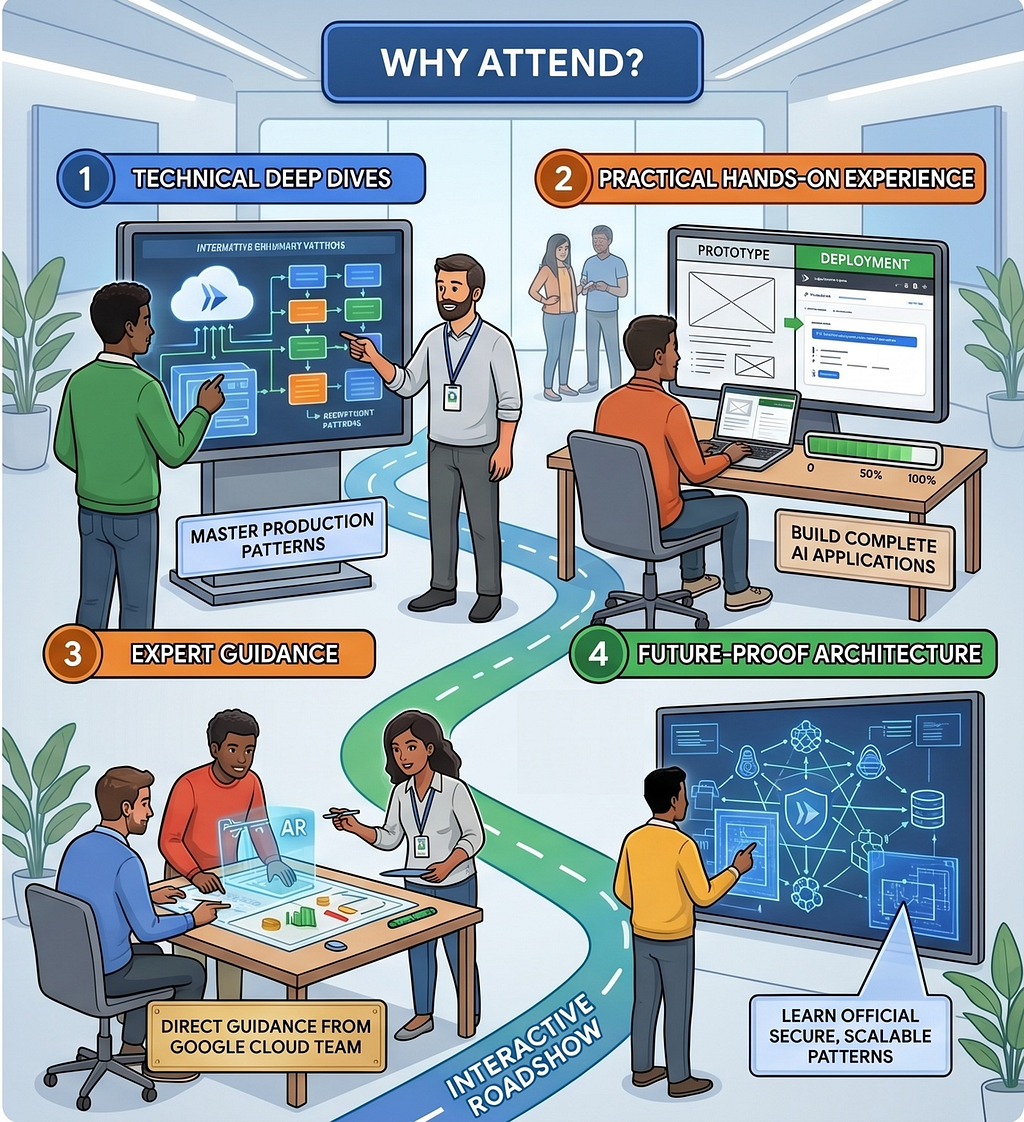
The Accelerate AI with Cloud Run roadshow is hosting in-person workshops across various cities in North America, including Sunnyvale, CA; Seattle, WA; New York City, NY; Los Angeles, CA; Boston, MA; and Washington D.C. These interactive, hands-on sessions allow developers to learn the core pillars of production-grade AI development directly. For more details, check out the blog post.
Write for Google Cloud Medium publication
If you would like to share your Google Cloud expertise with your fellow practitioners, consider becoming an author for Google Cloud Medium publication. Reach out to me via comments and/or fill out this form and I’ll be happy to add you as a writer.
Stay in Touch
Have questions, comments, or other feedback on this newsletter? Please send Feedback.
If any of your peers are interested in receiving this newsletter, send them the Subscribe link.
Google Cloud Platform Technology Nuggets — July 1–15, 2026 was originally published in Google Cloud – Community on Medium, where people are continuing the conversation by highlighting and responding to this story.
Source Credit: https://medium.com/google-cloud/google-cloud-platform-technology-nuggets-july-1-15-2026-05095362a95c?source=rss—-e52cf94d98af—4
About the Author